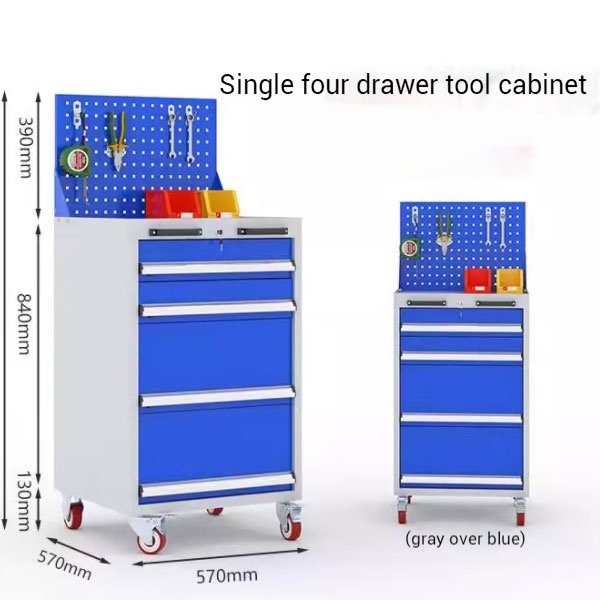
Electricians carry a specific problem that no other trade deals with at the same scale: small parts proliferation. Wire terminals, cable lugs, circuit breakers, fuse carriers, DIN rail components, cable ties, crimp connectors, heat shrink tubing — the list grows with every job type. These items disappear in drawer bins. They get mixed in with wrenches. They spill out when someone rummages for a multimeter. This tool cart solves the parts problem with dedicated side bins that keep small components sorted, visible, and reachable without opening a single drawer.
Side Parts Bins for Electrical Components
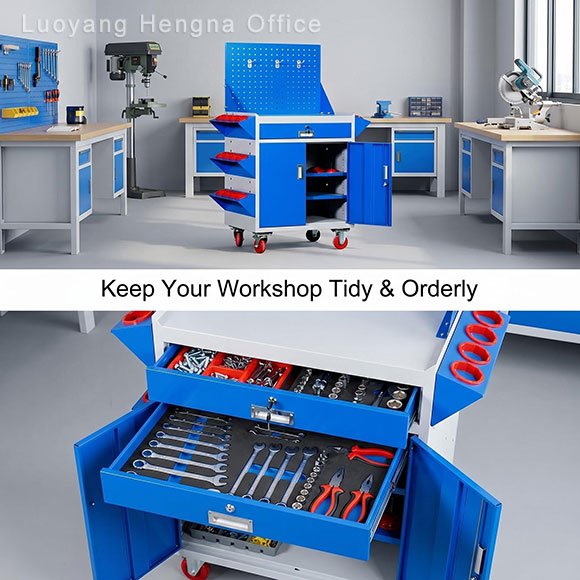
The left side panel holds three tiered storage bins. Each bin sits at a different height, stepped back from the one below it. Electricians organize components by category — top bin for wire terminals and connectors, middle bin for cable ties and heat shrink tubing, bottom bin for fuses and DIN rail components.
The bins have open fronts with no lids. Electricians see every item at a glance. Grab a handful of M4 ring terminals from the top bin, pull heat shrink from the middle, grab a fuse carrier from the bottom. No unlatching. No digging through mixed containers. The parts sit in separate compartments so nothing gets tangled or confused.
The bin walls rise high enough to hold contents during movement. The cart rolls across workshop floors, through doorways, and between job sites — the bins keep everything in place. No spilled terminals. No mixed cable ties.
One Drawer for Hand Tools
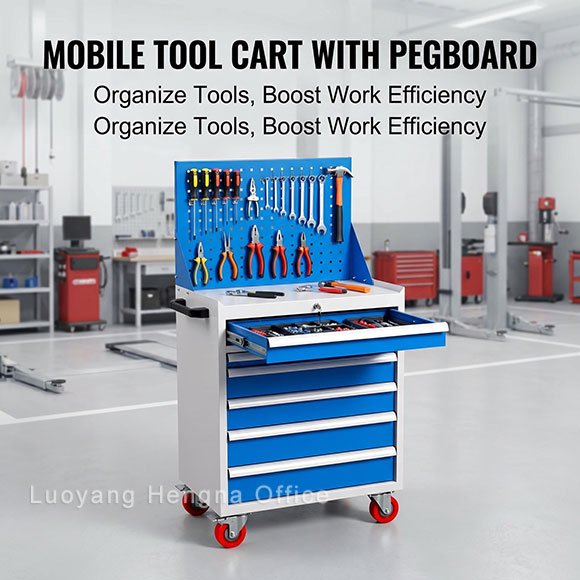
The main drawer runs the full 680mm width of the cart. This single wide drawer holds the hand tools electricians reach for constantly: wire strippers, side cutters, lineman’s pliers, screwdrivers, voltage testers, and insulated wrenches.
The drawer slides on ball-bearing rails and extends fully. Tools at the back come within reach without digging past front items. The shallow depth keeps everything visible — no burying small screwdrivers under a pile of pliers.
A central lock secures the drawer alongside the cabinet doors below. One key turn. Drawer locked. Cabinet locked. Small parts bins stay accessible since they sit outside the lock zone — electricians still grab terminals and cable ties while the valuable hand tools stay secured.
Lockable Cabinet for Power Tools and Test Equipment
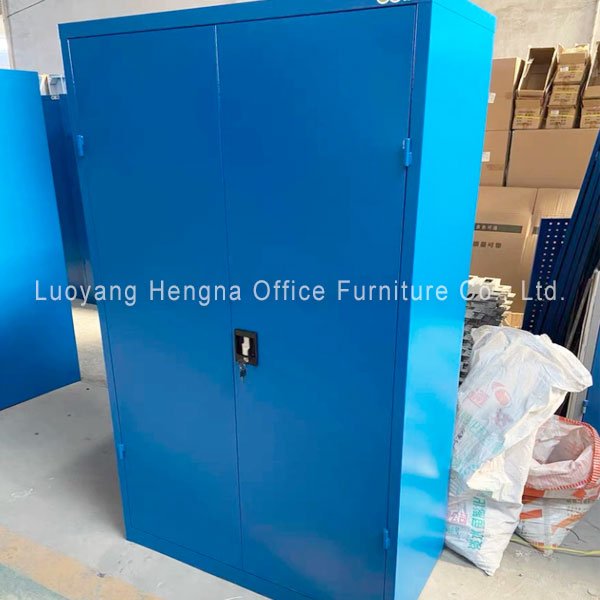
The lower cabinet opens with two doors. Inside, an adjustable shelf divides the space into two levels. Electricians store power tools here — rotary hammers, impact drills, hole saw kits, and conduit benders. Test equipment fits as well: clamp meters, insulation testers, earth resistance testers, and phase sequence meters.
The cabinet keeps expensive equipment locked when the cart sits unattended. Electrical workshops carry high-value test gear. A clamp meter alone costs more than some workers spend on hand tools in a year. The lock protects that investment.
The adjustable shelf moves between three height positions. Set it low for tall conduit bender boxes. Set it at mid-height to separate power tools from test meters. Each workshop configures the shelf to match the gear that goes into the cabinet.
Perforated Back Panel for Hanging Tools
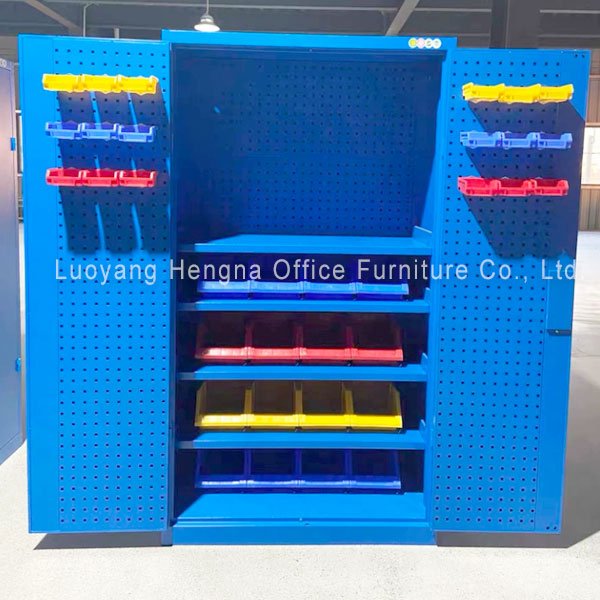
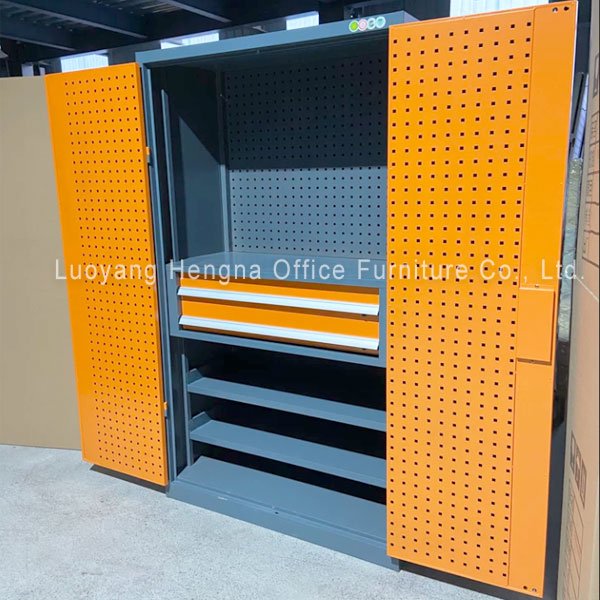
The back panel rises above the drawer, perforated with holes on 25mm centers. Standard hooks hold commonly used items: voltage tester pens, fish tapes, wire pullers, cable measuring wheels, and flashlight holders.
Electricians working on switchgear or distribution panels stage tools on the pegboard before climbing up. Everything hangs at eye level. No bending to the floor. No searching through a bag while balanced on a step ladder. Grab the tool, reach into the panel, and work.
The pegboard detaches from the frame. Electrical contractors with multiple job types swap panels between residential wiring hooks and industrial control panel hooks. The right tools appear for the right job in under a minute.
Silent Casters for Sensitive Environments
Four 360° swivel casters mount to the base with two foot-activated brakes. The wheel surface uses soft polyurethane that rolls quietly across concrete, tile, and epoxy floors.
Electricians work in environments where noise matters. Hospitals, data centers, server rooms, and office buildings restrict noise during working hours. A cart that squeals across a hospital corridor at 2 AM during an emergency repair draws complaints. These casters roll quietly enough for one-handed operation beside occupied patient rooms.
Brakes hold the cart in place when electricians lean against it for leverage while pulling cable through conduit or tightening a large breaker connection. Double ball bearings handle direction changes in tight spaces between electrical panels.
Steel Build for Daily Workshop Use
The body uses cold-rolled steel welded at every joint. The powder-coat finish comes in standard blue and white. Electrical workshops expose equipment to copper dust, PVC shaving debris, and occasional solvent contact from contact cleaner sprays. The coating handles all of it.
The push handle uses tubular steel with a rubber grip. Electricians push the cart with hands that just finished stripping wire or applying cable gel. The grip provides traction regardless. The handle height works for technicians from 165cm to 195cm.
How Electrical Teams Use This Cart
Commercial Building Maintenance: Building electricians keep one cart per floor or per riser room. The side bins hold the terminals, connectors, and cable ties needed for daily repairs. The drawer holds hand tools. The cabinet holds power drills and test meters. Roll the cart to the panel, lock the casters, and work without walking back to the electrical shop.
Industrial Plant Electrical Department: Plant electricians cover motor control centers, distribution boards, and field instruments across the facility. One cart holds everything for routine maintenance rounds — insulation resistance testing, breaker inspections, and terminal tightening. The side bins organize replacement terminals and fuses by equipment type.
Data Center Cabling Teams: Low-voltage cabling contractors use the side bins for RJ45 connectors, cable ties, velcro wraps, and patch panel labels. The cart rolls between server racks during cable installation. Everything stays on the cart — no climbing down from the ladder to grab connectors from a box on the floor.
Emergency Repair Response: When a breaker trips or a motor fails at 3 AM, the on-call electrician grabs the cart and rolls to the problem location. Test meters in the cabinet. Hand tools in the drawer. Replacement fuses and terminals in the side bins. Every item for the first-response diagnosis sits on one mobile unit.
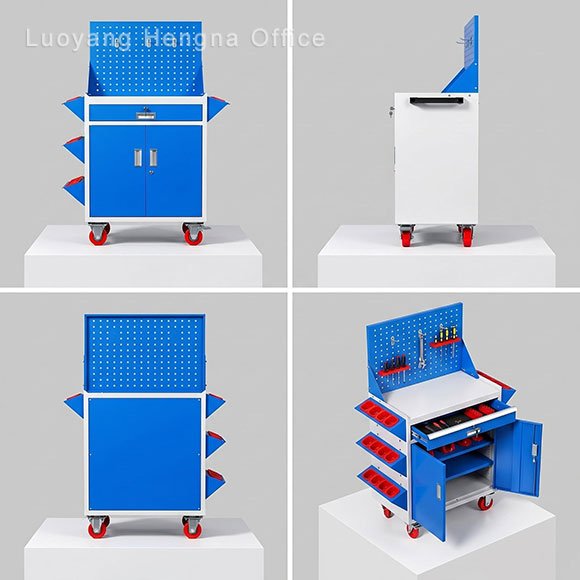
Electrician Tool Cart with Side Parts Bins Specifications
| Feature | Specification |
|---|---|
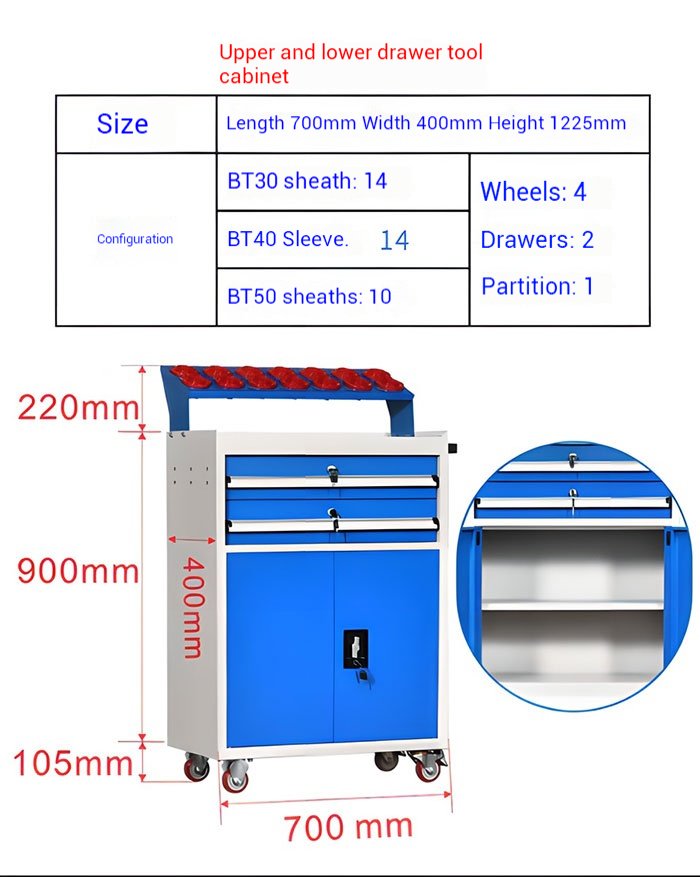
| Overall Dimensions | 680mm W × 500mm D × 970mm H |
| Drawer Configuration | 1 wide drawer, ball-bearing slides |
| Side Parts Bins | 3 tiered bins, left side panel |
| Cabinet | Double-door, adjustable shelf |
| Back Panel | Perforated, removable |
| Caster Type | 4× 360° swivel, 2 with brakes |
| Body Material | Cold-rolled steel |
| Finish | Powder coat, blue/white |
| Locking | Central lock, drawer and cabinet |
FAQ
Q: How many tools can the side parts bins hold?
Each bin holds roughly 2kg of small components. Electricians typically stock one bin with 200–300 wire terminals, one with 500 cable ties, and one with 50–80 fuse carriers. The bins organize by type, not by weight — small parts stay sorted and visible.
Q: Does the central lock secure the side bins?
No. The central lock controls the main drawer and the lower cabinet doors only. The side parts bins remain accessible at all times. This design allows electricians to grab terminals, cable ties, and fuses without unlocking the cart — while hand tools and test equipment stay locked inside.
Q: Can the side bins be removed or reconfigured?
The bins are fixed-welded to the left panel. They cannot be removed or rearranged. This prevents bin loss and keeps the structure rigid during daily workshop use.
Q: What size doorways does this cart fit through?
The 680mm width clears standard 800mm interior doors and 760mm older industrial doorways. The cart passes through without tilting or removing contents.
Q: Are the casters safe for epoxy-coated floors?
Yes. The polyurethane wheel tread rolls without leaving marks on sealed, epoxy-coated, or painted concrete floors. No rubber deposits. No scuff marks that require cleaning before sensitive environments like hospitals or data centers.
Q: Can I order custom colors?
Yes. We match Pantone and RAL color codes for volume orders. Contact us with your requirements for pricing and lead time.
Get in Touch
We manufacture these carts at our facility in Luoyang, China. Contact us with your quantity and delivery requirements. We respond within 24 hours on business days.