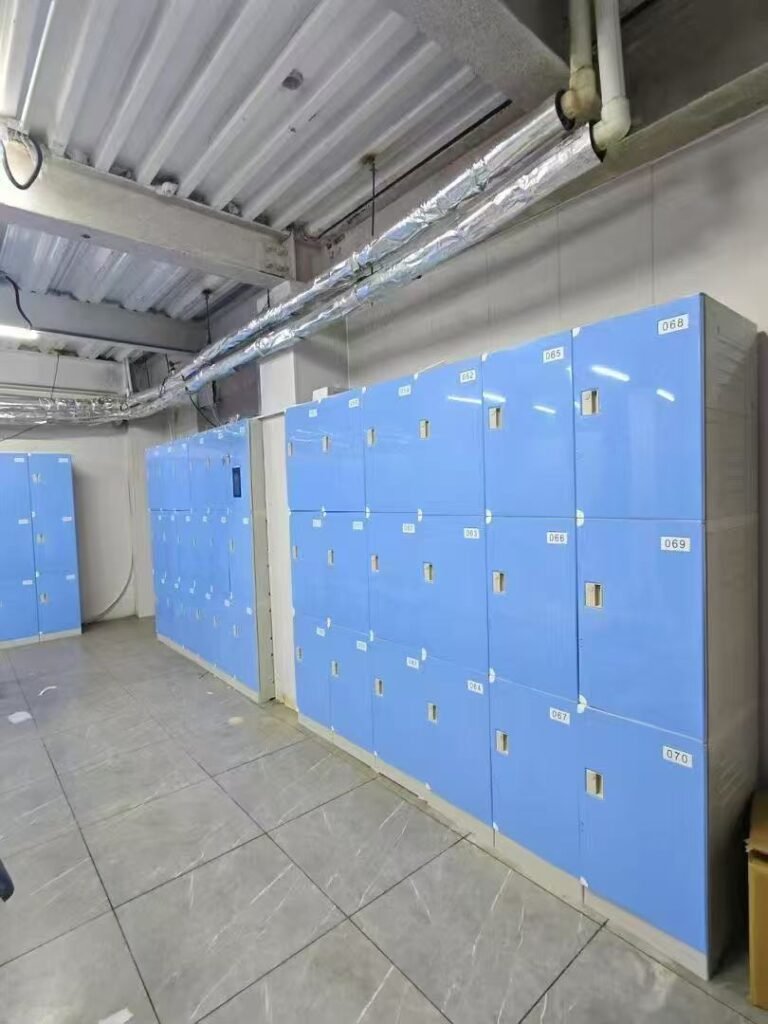
Metal lockers in gyms need replacement every three years.
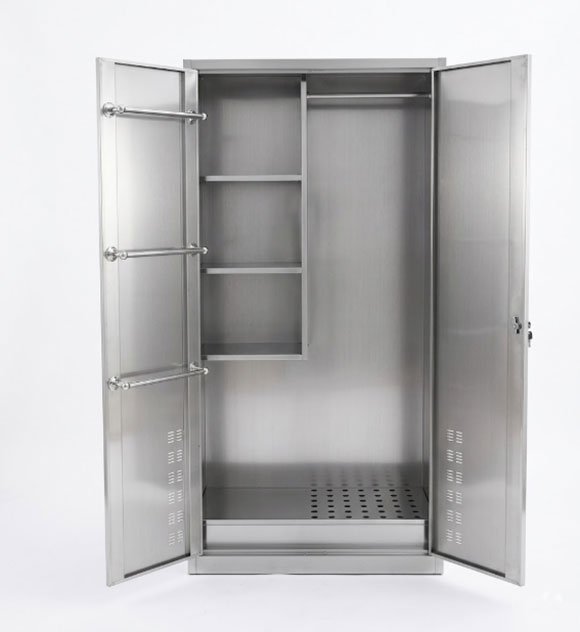
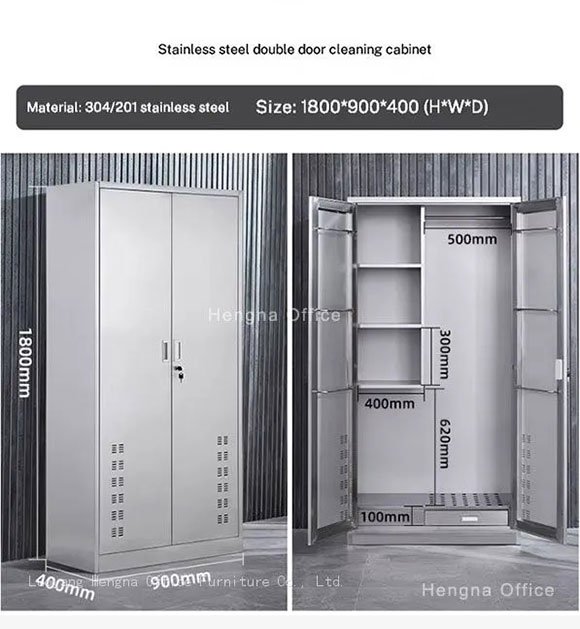
Not because they are poorly made — because the environment destroys them. Sweat contains salt that reacts with metal. Hinges rust first, then the doors start sagging. A barbell plate bumps into a locker door — dented. Can’t be fixed, whole door has to be replaced. Stainless steel? Tried it. Costs twice as much, didn’t last any longer. A chain gym owner once calculated that replacing lockers twice in five years costs enough to open a new location.
And moving them? Call maintenance. Three or four people, half a day. When the gym reconfigures its floor plan, you go through it again.
ABS plastic lockers work differently. The material does not rust — sweat, chlorine, moisture, nothing reacts with it. High-impact ABS absorbs the hit from gym equipment and springs back — no dents. The biggest difference is weight: two people can carry and position a unit. No need to call maintenance. When the gym changes its layout for the new season, you just push the lockers where they need to go.
Gym Lockers: How They Compare
| Comparison | Metal Locker | Standard Plastic Locker | ABS Plastic Locker |
|---|---|---|---|
| Rust | Sweat + humidity cause rust in 1-2 years | Does not rust | Does not rust, 20-year design life |
| Impact | Dents permanently from equipment hits | Brittle, cracks | High-impact ABS absorbs and springs back |
| Weight | 3-4 people + equipment needed | Light | Two people can carry it |
| Locks | Single lock type per order | Few options | 4 mixable types in one order |
| Color | Gray/white only, paint chips | Limited options | 8 standard + custom, color is molded in |
| Formaldehyde | Welding/powder coating VOCs | Zero with virgin material | Zero formaldehyde |
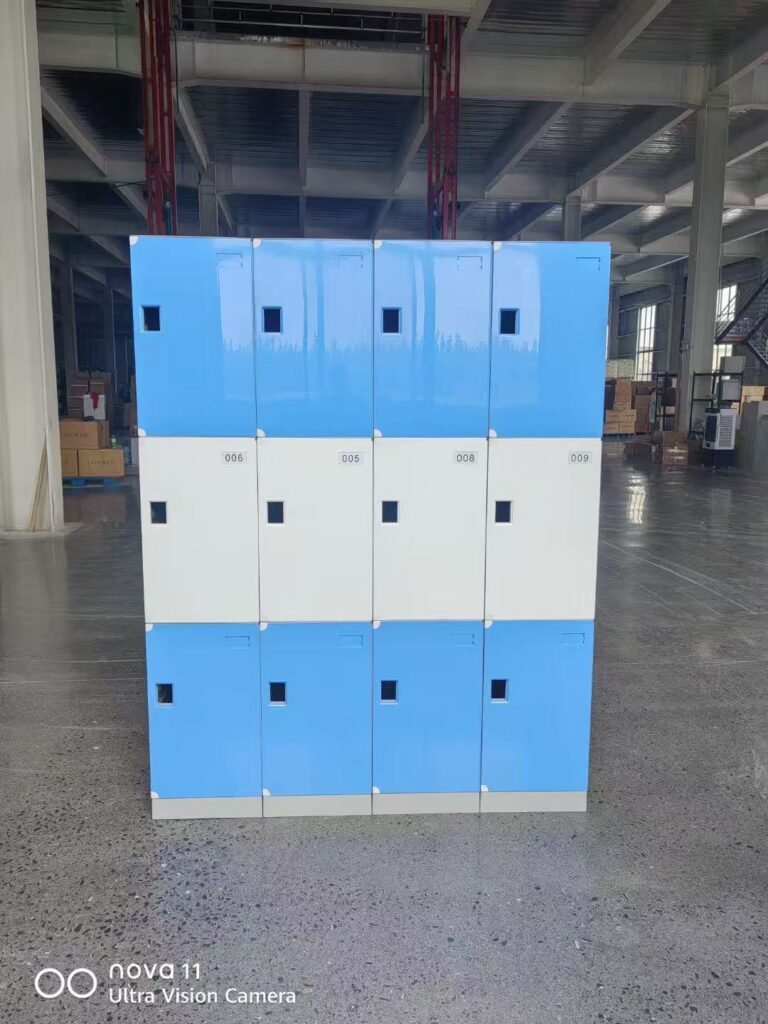
Lightweight ABS Plastic Locker 3×3 Tier for Gym Specifications
| Item | Specification |
|---|---|
| Overall dimensions | 1196mm(W) × 960mm(H) × 420mm(D) |
| Configuration | 9 doors (3 columns × 3 rows) |
| Single compartment | 372mm(H) × 320mm(W) × 420mm(D) |
| Fits | Gym bag, shoes, towel, water bottle |
| Base | 80mm raised molded base, moisture & flood barrier |
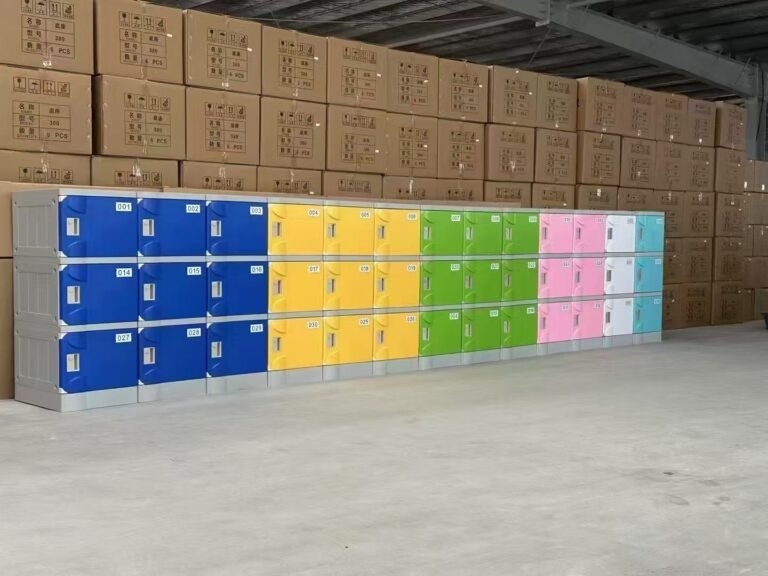
| Standard colors | Yellow, white, blue, pink, gray, green, orange, brown (8 colors) |
| Custom colors | Pantone matching (MOQ 10 units) |
| Locks | Mechanical key / Combination / RFID / Padlock hasp (mixable) |
| Assembly | Tool-free clip-and-lock, side-by-side and stackable |
| Certification | CE |
No Tools, No Waiting
The lockers arrive and two people assemble them with a rubber mallet. The panels click together through interlocking joints. Level it, done. A 200-door changing room? Two people finish it in one day. Metal lockers need welding and painting — that means shutting down the changing room for at least a weekend.
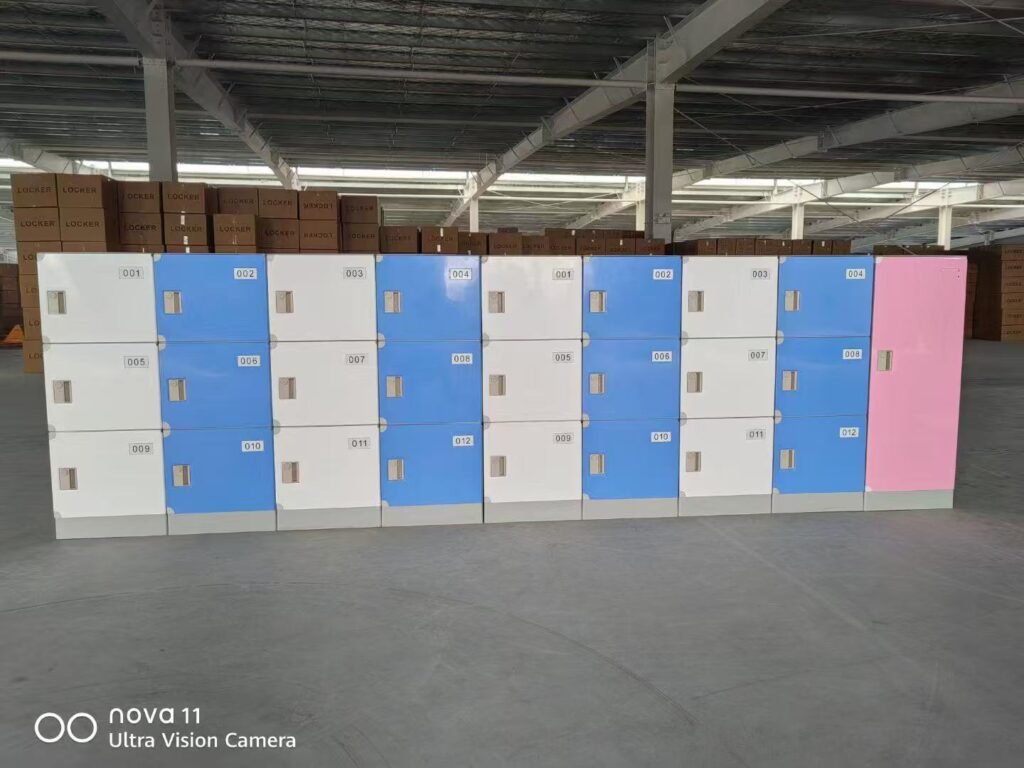
For a gym chain expanding to new locations, this matters. The ABS lockers arrive and are usable the next day. No off-gassing, no waiting for paint to cure. The modular design connects side-by-side. Need to add lockers later? Place another unit directly beside the existing row.
Test one unit before ordering bulk — MOQ starts at 1.
Locks: An Overlooked Gym Requirement
A gym typically has three types of locker users. Personal trainers need a dedicated key for their permanent locker. Regular members want the convenience of an RFID wristband. Drop-in visitors get a one-time combination code.
With metal lockers, you used to place three separate orders for three different locker types — three shipments, three inventory entries, a headache for the warehouse.
ABS lockers accept four lock types in a single order. One row of cabinets can have key locks for the staff area, RFID for members, and combination locks for visitors. Arrives together, installed together, assigned by zone. One order, one line of inventory.
What Is Inside Each Door
A key hook inside the door — trainers keep a permanent locker without checking out a key daily. A retractable hanging rod for jackets, pushed up when not in use. A towel bar that lets wet towels air out instead of staying damp in a closed compartment. A storage cubby for watches, phones, and glasses.
An open top compartment for cleaning spray, shared locks, or items members forgot.
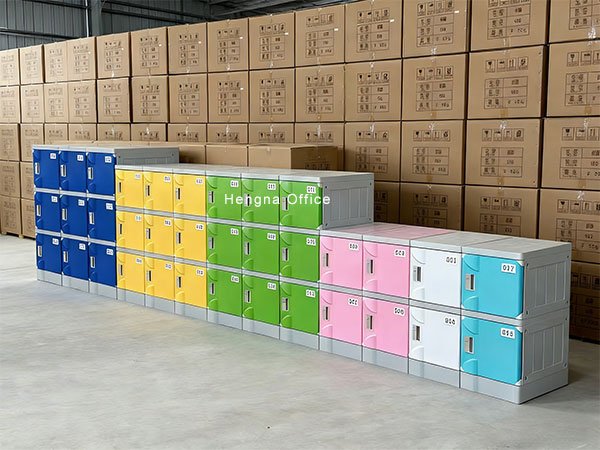
All corners are rounded — bumping into them during a workout doesn’t hurt. The number plate is embedded in the panel, not a sticker that will peel off. The 80mm base keeps mopping water out. Spring catches keep doors closed when unlocked. When it gets dirty, hose it down or wipe it with a damp cloth.
Colors and Locks
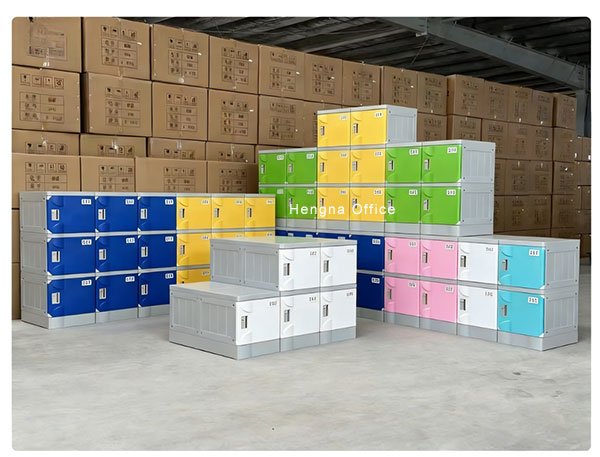
The color runs through the material — not a coating, not a laminate. Scratches don’t change it. Mix 8 colors across zones: dark for the weight area, bright for group classes, a unified brand color across franchise locations. Pantone custom-matching for higher precision.
Four lock types ship in the same batch. Mechanical keys for staff, RFID wristbands for members, combination codes for visitors, padlock hasps for those who bring their own. One delivery, no separate purchase orders. CE certified, ready for third-party inspection.
How Many Do You Need?
Gym changing rooms should plan for 1.2 times peak occupancy. For a gym with 200 simultaneous users, go with 240 compartments — roughly 27 units of 9-door cabinets. A single row of 3-column units occupies about 3.2 by 2 meters of floor space. We provide free layout drawings.
FAQ
| Question | Answer |
|---|---|
| MOQ | 1 unit (standard color + standard lock) |
| FOB | Contact us for FOB pricing |
| Warranty | 1 year |
| Lead time | Regular stock available, depends on quantity and configuration |
| OEM/ODM | Silk-screen logo / custom color / custom lock mix / custom manual |
| Packaging | Each unit individually packed, suitable for sea freight |
About Outdoor Use
ABS performs well indoors and in covered outdoor areas. If the lockers will be in direct sunlight, we recommend an indoor location or a shaded structure. Any material changes under prolonged direct exposure — no point in claiming otherwise.
For inquiries, please let us know your application, quantity, color preference, and lock type. We will respond with a quote within 24 hours.