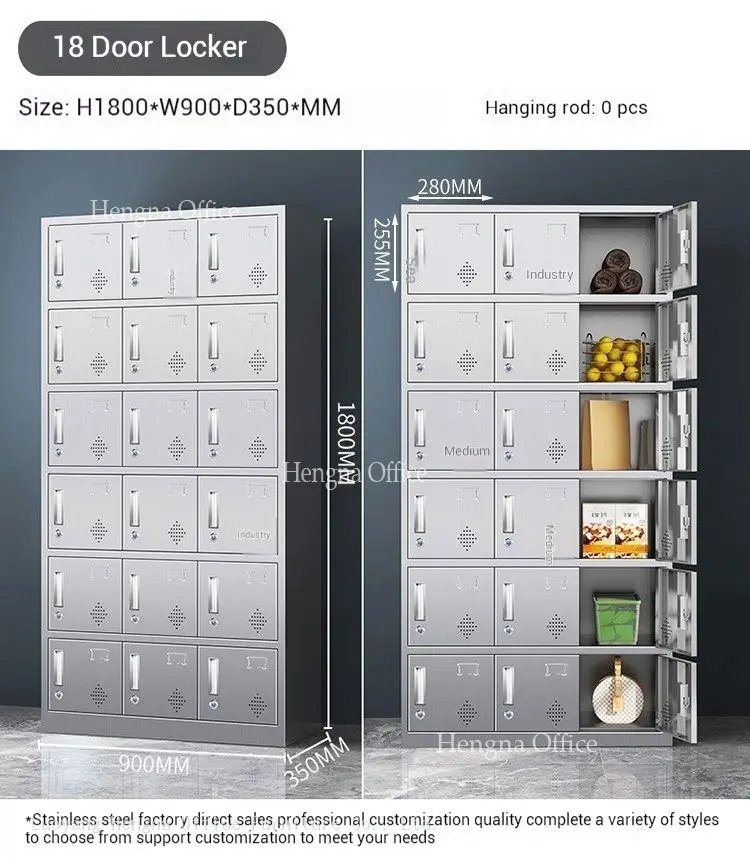
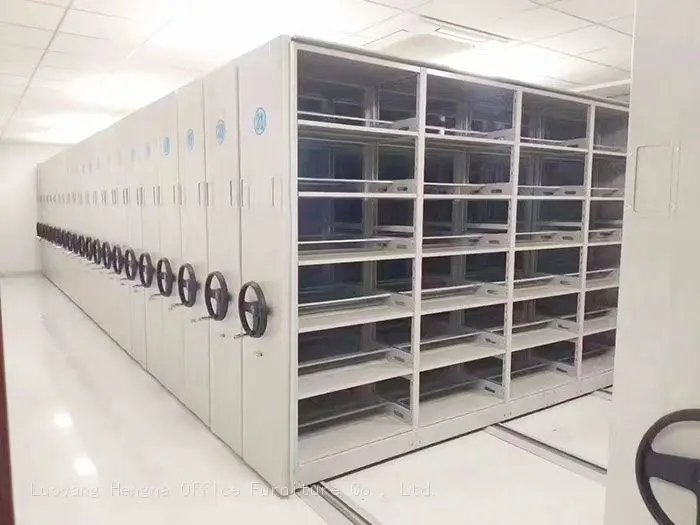
If you run an archive room, you already know where the records go to disappear. Cardboard boxes stacked on boxes, index cards slipped into old cartons, and a lock on each drawer that does not really lock anything — because the key from Cabinet 3 opens Cabinet 7 anyway. When an audit or a records request lands, half a day vanishes just to find one file. Records are meant to be kept, not buried, and the difference between an archive that works and one that swallows itself is usually one piece of furniture: a card file cabinet built for index card storage, not for a light office shelf. We build these from the factory floor, and below are the questions archive managers ask us most.
What is a card file cabinet, and why archives ask for the central lock version
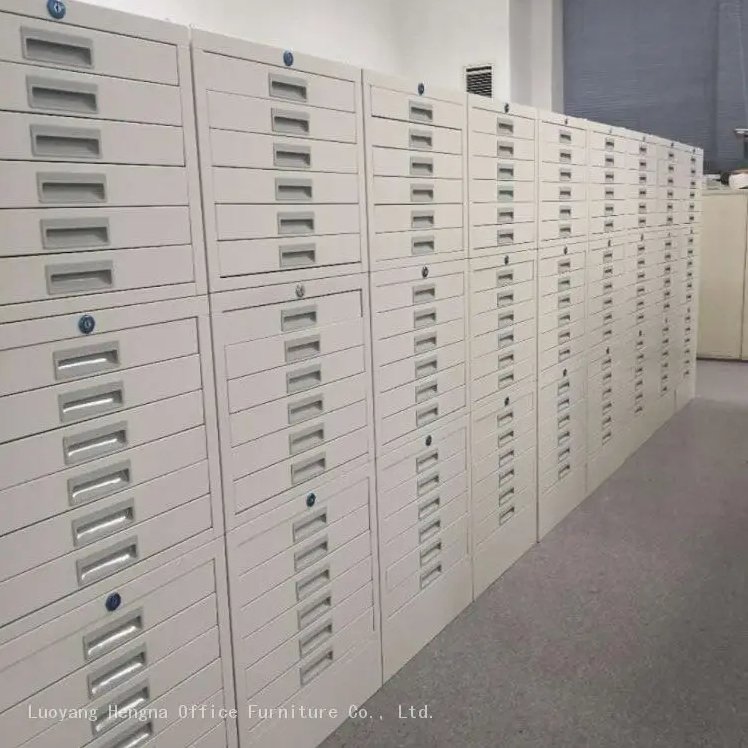
A card file cabinet is a steel drawer cabinet built around small records — A4 folders, hanging files, and index cards — rather than around boxed archive boxes. In an archive room it does a job that shelves cannot: each record group lives in its own drawer, labelled on the holder, pulled out fully, and pushed back without disturbing the rest of the row.
The phrase archivists search for is usually a card file cabinet with central lock 4 drawer. Central locking means one key locks every drawer on the cabinet at once. You do not walk down a row testing four separate locks. Lock the front, the whole cabinet is sealed.
How the locks actually protect records
Two lock points matter in an archive, and cheap cabinets miss both.
First, the lock core is steel, and the locking runs central — one turn, all drawers locked. Second, and this is the point buyers forget to ask: keys within the same batch do not open each other’s cabinets. We group the lock cores per batch, so the key for your Cabinet 1 never opens Cabinet 2 on the same row. In a government or institutional archive where records are confidential, that is the difference between a lock and a decoration.
Why the anti-tip interlock is not optional
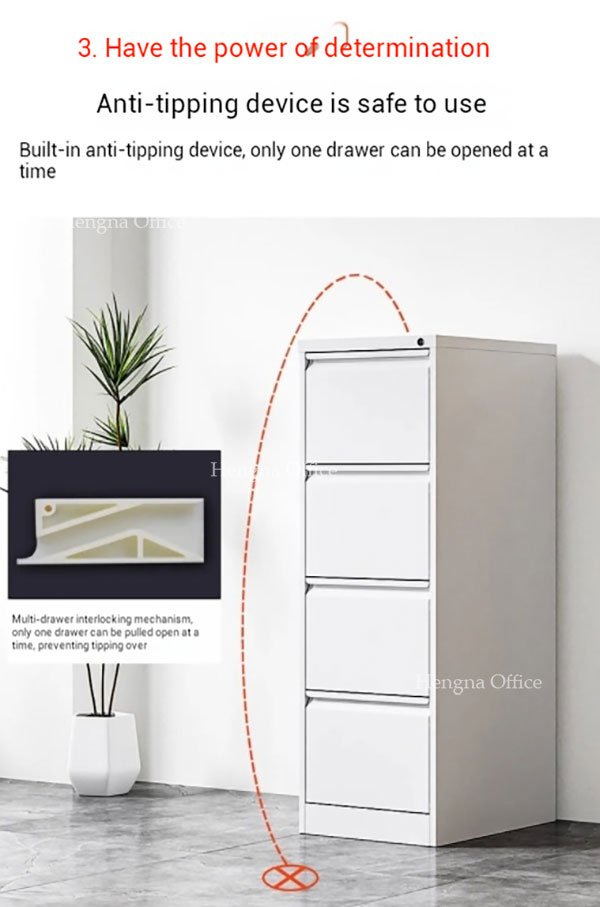
Pull a full drawer out and the weight sits at the front. A cabinet with no interlock lets you open three drawers at once, and three loaded drawers leaning forward can tip the whole unit onto the floor — or onto someone standing at the bench. Our cabinets carry an anti-tip interlock: open one drawer and the others stay shut until the first is closed. Only one drawer slides out at a time. For a public tender, anti-tipping is often a hard requirement, not a preference.
How many index cards fit in one drawer
Roughly 200 folders or index cards per drawer, depending on thickness. A 4-drawer narrow cabinet then holds about 800 card-sized record groups inside a footprint of 460 mm wide by 620 mm deep. That is the space-saving part: the records go up, in drawers, instead of spreading across tables and loose floor racks.
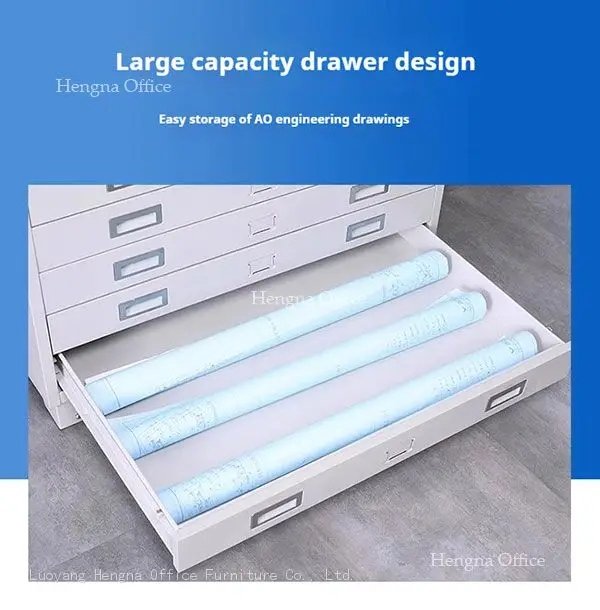
The drawers run on 3-section ball bearing slides and pull out to full extension. Nothing at the back of a full drawer stays hidden behind the front row. Each drawer is rated around 35 kg, and loaded folders do not bind the slide. An adjustable follower block at the back keeps standing files upright instead of slumping sideways.
Steel, not wood, in a basement archive
Archive rooms are often basement rooms, and basement rooms breathe damp. A wooden drawer swells, warps, and grows mould — and the records inside take the damage. Our cabinets are cold-rolled steel sheet, 0.6–0.8 mm thick, finished in electrostatic powder coating. The surface does not absorb moisture, does not grow mould, and the powder coat stands up to humidity without peeling. Wood is a look. Steel is what keeps the records intact year after year.
The 4 drawer cabinet as the archive default
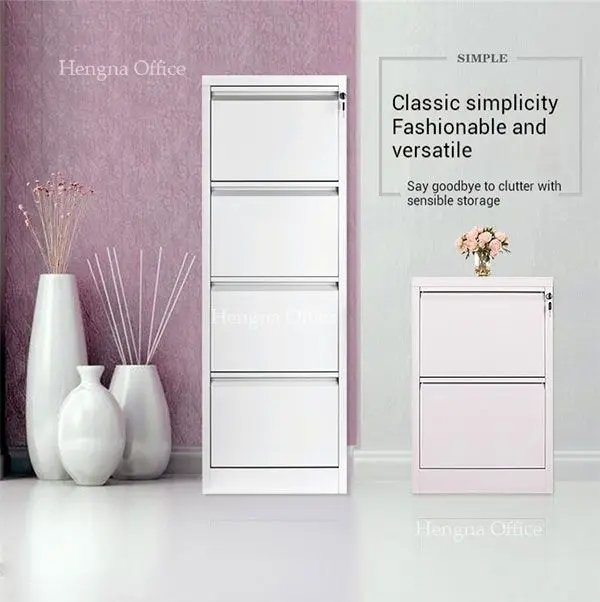
Narrow cabinets come in 2, 3, 4, and 5 drawer heights. Most archives settle on the 4 drawer unit — it stands 1320–1330 mm tall, so the top drawer is still a comfortable reach, and four drawers give enough record groups per cabinet without the unit becoming a ladder climb. When a room needs to store hanging files or larger folders, the wide lateral version at 900 mm depth is the answer, and it too carries the central lock and the anti-tip interlock.
The spec sheet
Here is the cabinet we build, in plain numbers, so you can compare it against any quote:
| Specification | Value |
|---|---|
| Material | Cold-rolled steel sheet, 0.6–0.8 mm |
| Finish | Electrostatic powder coat / baked paint, white, grey, or two-tone |
| Slides | 3-section ball bearing, full extension |
| Load per drawer | Around 35 kg |
| Capacity per drawer | Around 200 folders / index cards |
| Lock | Central locking, steel core, same-batch keys non-cross-opening |
| Safety | Anti-tip interlock — one drawer at a time |
| Narrow sizes (W460 × D620) | 2-drawer H720/730, 3-drawer H1020/1030, 4-drawer H1320/1330, 5-drawer H1631 |
| Wide sizes (W450/460 × D900) | 2-drawer H730, 3-drawer H1030, 4-drawer H1330/1331 |
| Structure | KD flat pack, sea-freight friendly |
| Warranty / certification | 1-year warranty, CE |
Dimensions carry a ±10 mm tolerance; confirm against the physical drawing in the quotation.
FAQ
What is the minimum order? Regular orders move by full container (20GP/40HQ). Smaller trial orders are negotiable by model and colour — confirm the quantity in the quotation.
How long is delivery? Standard models ship in 20–30 days. Custom work — silk-screened logo, custom colour, custom packaging — depends on quantity.
Do the keys cross between cabinets? No. We group lock cores per batch, so keys do not open another cabinet in the same batch.
Can I add casters to move a cabinet? Yes, a mobile version with lockable swivel casters is available.
Is it CE certified? Yes, and the cabinet carries a one-year warranty; slides and lock parts are replaced on non-wear damage.
Where do I get a price? Send us the drawer count, quantity, and delivery port — FOB or CIF from Qingdao or Tianjin — and the quote goes out within 24 hours.
A final buying note
An archive room earns its keep the day an auditor asks for one record and you hand it over in minutes. A steel card file cabinet with a central lock, non-cross-opening keys, an anti-tip interlock, and full-extension 35 kg drawers is the version you set up once and stop thinking about. That is the whole job of archive room index card storage: the records should be findable, not fragile.
Cindy Steel Furniture — factory-direct steel card file cabinets, built for archive room index card storage.