Mobile phones have become indispensable tools for communication and information access. However, in environments such as schools, factories, and hospitals, uncontrolled phone use can lead to distractions, safety risks, and management challenges. As a result, organizations are increasingly turning to cell phone charging lockers as a secure and efficient solution for device storage and charging.
This article explains why cell phone charging lockers are essential in these environments and how they help improve security, productivity, and overall operational efficiency.
The Growing Need for Secure Phone Storage
With the widespread use of smartphones, institutions face several common problems:
- Lost or stolen devices
- Unsafe charging practices
- Disruptions caused by phone usage
- Lack of centralized management
Traditional storage solutions often fail to address these issues. Cell phone charging lockers provide a structured system that combines secure storage and organized charging in one place.
What Are Cell Phone Charging Lockers?
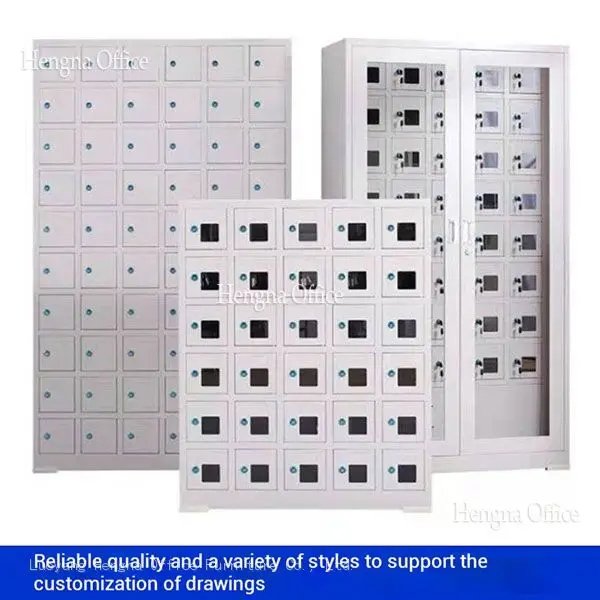
A cell phone charging locker is a specially designed cabinet with multiple individual compartments, each equipped with a charging interface. Users can safely store and charge their devices while administrators maintain control over access and usage.
Core Functions
- Secure individual storage compartments
- Integrated charging ports
- Centralized device management
Charging Lockers vs Traditional Storage
Unlike standard lockers or open charging stations, charging lockers:
- Prevent unauthorized access
- Reduce cable clutter
- Protect devices during charging
Why Secure Device Storage Matters in Schools
Reducing Distractions and Improving Focus
In educational environments, mobile phones can disrupt learning. Charging lockers allow schools to collect and store phones during class hours, helping students stay focused.
Preventing Phone Loss and Damage
Centralized storage reduces the risk of phones being lost, stolen, or damaged in backpacks or classrooms.
Supporting School Management Policies
Many schools enforce phone-use policies. Charging lockers provide a practical way to implement these rules without inconveniencing students.
Why Factories Need Cell Phone Charging Lockers
Improving Workplace Safety
In manufacturing environments, mobile phone use can lead to accidents. Lockers ensure phones are stored securely during working hours.
Enhancing Productivity
By limiting phone access on the production floor, factories can reduce distractions and improve efficiency.
Secure Storage for Personal Devices
Workers can store and charge their phones safely, knowing they are protected throughout the shift.
Why Hospitals and Healthcare Facilities Rely on Charging Lockers
Maintaining Quiet and Hygienic Environments
Hospitals require controlled phone usage to maintain calm and cleanliness. Charging lockers help reduce unnecessary phone activity in sensitive areas.
Secure Storage for Medical Staff
Doctors and nurses need a reliable place to store and charge devices during long shifts.
Supporting Professional Standards
Centralized phone storage supports hospital policies and professional conduct requirements.
Key Security Features of Modern Cell Phone Charging Lockers
Individual Compartments and Locking Systems
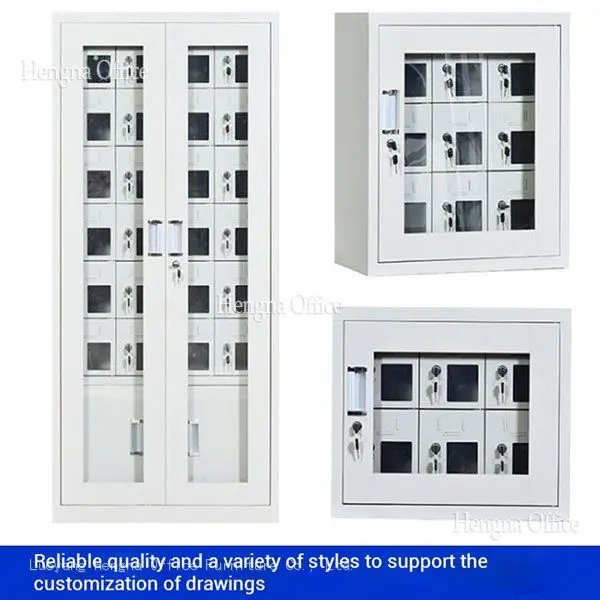
Each device is stored in a separate compartment with its own lock, ensuring privacy and security.
Anti-Theft and Tamper-Resistant Design
Quality lockers feature strong cabinet structures and secure doors to prevent unauthorized access.
Electrical Safety and Power Protection
Built-in safety systems protect devices from overloads and electrical faults during charging.
Charging Capabilities and User Convenience
Multiple Charging Interfaces
Modern charging lockers support various devices through:
- USB ports
- Type-C connectors
- AC power outlets
User-Friendly Design
Clear labeling and easy access make lockers suitable for high-traffic environments with frequent user turnover.
Choosing the Right Door Count and Capacity
Selecting the correct locker size ensures smooth operation.
| Environment | Recommended Door Count |
|---|---|
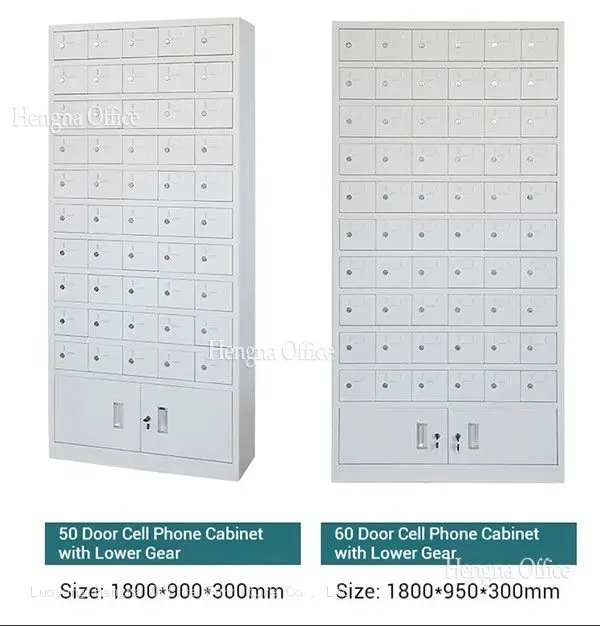
| Schools | 20–40 doors |
| Factories | 30–60 doors |
| Hospitals | 40–60 doors |
Planning for peak usage and future expansion is essential when choosing capacity.
Material Options: Steel vs Acrylic Charging Lockers
Steel Charging Lockers
- High durability
- Strong security
- Long service life
Ideal for factories and hospitals where security is critical.
Acrylic Charging Lockers
- Transparent panels for easy monitoring
- Faster inspections
- Improved management efficiency
Suitable for schools and supervised public spaces.
Factory-Direct Advantages for Institutional Buyers
Buying directly from the manufacturer provides:
- Customizable door counts and layouts
- Choice of materials and charging ports
- Cost efficiency for bulk orders
- Reliable quality control
Factory-direct solutions are ideal for large projects and long-term use.
FAQs – Cell Phone Charging Lockers
Q1: Are cell phone charging lockers safe for devices?
Yes. They are designed with secure compartments and electrical safety protection.
Q2: Can lockers support different phone models?
Most lockers support USB, Type-C, and AC charging, covering most devices.
Q3: Which environments benefit most from charging lockers?
Schools, factories, hospitals, and public facilities all benefit from organized phone storage.
Q4: Can lockers be customized for specific institutions?
Yes. Door count, materials, and charging configurations can be customized.
A Smart Investment in Secure Device Storage
Cell phone charging lockers are no longer optional in environments where security, safety, and efficiency matter. By providing secure storage, organized charging, and flexible configurations, they help schools, factories, and hospitals manage mobile devices effectively.
Investing in the right charging locker solution leads to improved productivity, better compliance with policies, and greater peace of mind for both users and administrators.