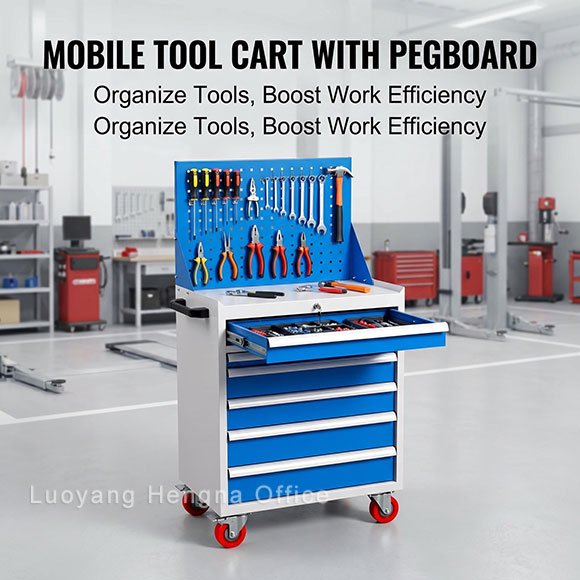
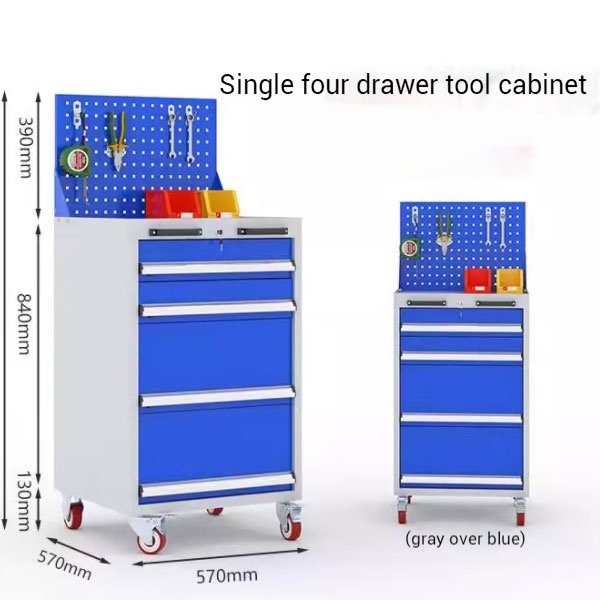
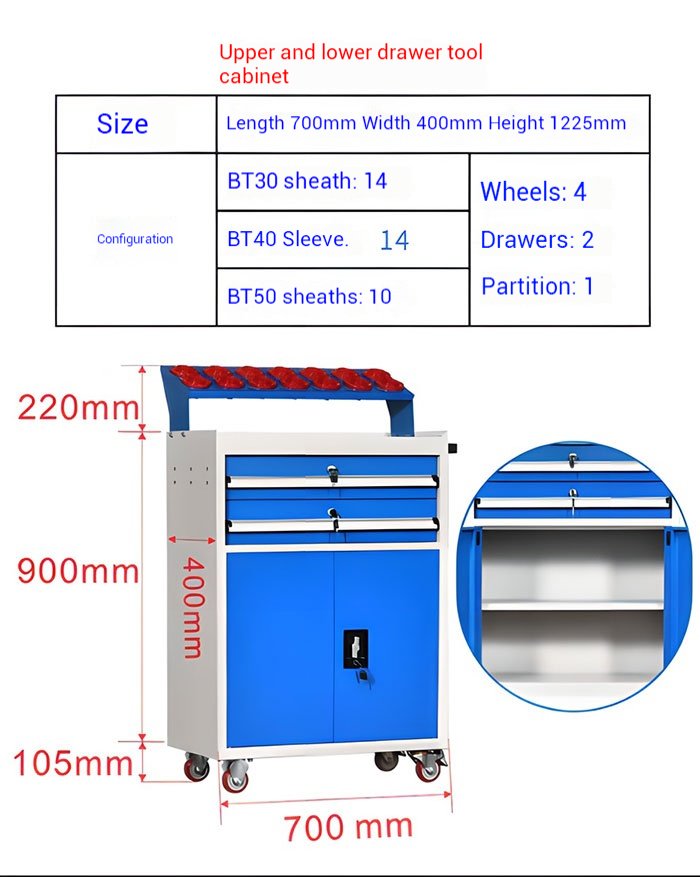
Mining workshops eat tool cabinets for breakfast. Dust packs into drawer slides until they jam. A dropped ore bucket dents the door so it won’t close. Six months in, the cheap cabinet you bought online looks like it survived a demolition derby. Sound familiar?
This guide walks you through what actually matters when picking a heavy duty tool cabinet for a mining site workshop. No fluff, no marketing buzzwords — just the specs and features that keep your tools organized and your cabinet standing after years of abuse.

Why Mining Workshops Destroy Regular Tool Cabinets
Underground and surface mining environments are harsher than almost any other industrial setting. Here’s what your tool cabinet faces every day:
- Abrasive dust: Coal dust, silica particles, and rock fines grind into drawer slides and door hinges. Standard ball-bearing slides fail within 3-6 months.
- Impact damage: Equipment moves through tight spaces. Forklifts, ore carts, and heavy tools bump into cabinets constantly.
- Moisture swings: Underground mines drip. Surface workshops go from dry heat to condensation overnight. Rust starts fast on thin powder coat.
- Tool loss: When drawers don’t close properly or cabinets lack locks, expensive precision tools walk away.
A cabinet built for an auto repair shop won’t survive a mining workshop. You need specific features designed for these conditions.
5 Features That Separate Mining-Grade Cabinets from Regular Ones
| Feature | Regular Cabinet | Mining-Grade Cabinet |
|---|---|---|
| Steel thickness | 0.6-0.8mm (22-24 gauge) | 1.0-1.2mm (16-18 gauge) |
| Drawer slides | Standard ball bearing | Heavy-duty roller slides, rated 50kg+ per drawer |
| Powder coat | Single coat, 40-60 microns | Double coat, 80+ microns, phosphate pre-treatment |
| Door hinges | Spot-welded thin steel | Full-length piano hinge or reinforced butt hinges |
| Locking system | Simple cam lock | Central lock with 3-point latch or keyed-alike system |
Each of these differences shows up within the first year. Thin steel dents. Standard slides jam. Single-coat powder chips and rust spreads underneath.
Drawer Configuration for Mining Tool Kits
Mining maintenance crews carry a specific mix of tools — heavy wrenches, precision instruments, electrical testing gear, and consumables like drill bits and grinding discs. The drawer layout needs to match:
- Deep bottom drawers (150-200mm): For heavy hand tools — sledgehammers, pipe wrenches, large ratchets. These drawers need full-extension slides rated at 75kg minimum.
- Medium middle drawers (75-100mm): For organized socket sets, pliers, and measuring tools. Foam inserts prevent tools from shifting during transport.
- Shallow top drawers (50-60mm): For precision instruments — calipers, multimeters, thread gauges. Anti-slip liners keep delicate tools in place.
- Open shelf section: For bulk items — oil cans, spare parts bins, cleaning supplies. Adjustable shelves let you customize the height.
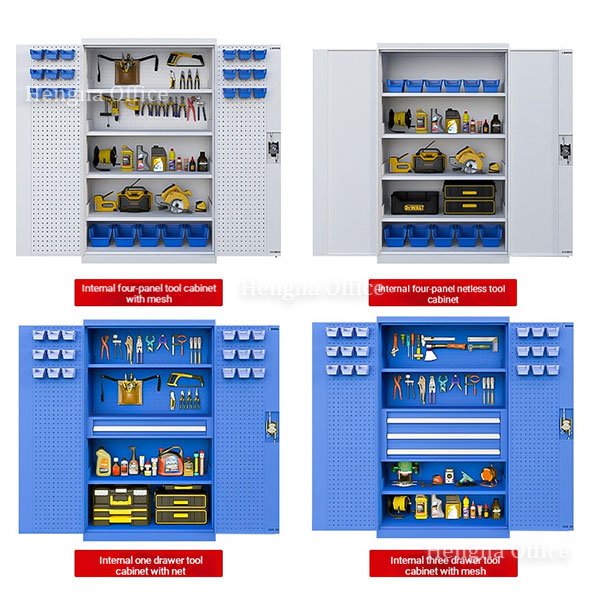
A 7-drawer cabinet with one open shelf section covers 90% of mining maintenance needs. For specialized crews (electrical, hydraulic), add a side cabinet with pegboard doors for hanging test leads and hose assemblies.
Dust Protection: The Overlooked Spec
Most buyers check steel thickness and load capacity. Few ask about dust protection. In a mining workshop, dust is the silent killer of tool cabinets.
Here’s what to look for:
- Sealed drawer fronts: Drawers should sit flush with a rubber or foam gasket when closed. This keeps fine particles from settling inside.
- Door seals: Full-perimeter weather stripping on cabinet doors reduces dust ingress by 80% compared to unsealed designs.
- Pegboard backing: Perforated back panels let you hang tools without them sitting in dust accumulation on shelf surfaces.
- Easy-clean surfaces: Smooth powder coat (not textured) wipes clean with a damp cloth. Textured finishes trap dust in the grain.
A cabinet with proper dust seals extends your tool life significantly. Precision measuring tools stored in sealed drawers stay accurate. Tools left on open shelves accumulate abrasive particles that cause premature wear.
Impact Resistance: Steel Thickness and Construction
In a mining workshop, impacts happen. The question isn’t if your cabinet will get hit — it’s whether it survives the hit.
Steel thickness is the first line of defense:
| Gauge | Thickness | Impact Resistance | Suitable For |
|---|---|---|---|
| 24 gauge | 0.6mm | Low — dents easily | Office, light retail |
| 22 gauge | 0.8mm | Medium — resists minor bumps | General workshop |
| 20 gauge | 0.9mm | Good — handles daily bumps | Light industrial |
| 18 gauge | 1.2mm | Heavy — resists major impacts | Mining, heavy industrial |
| 16 gauge | 1.5mm | Maximum — near tank-grade | Extreme environments |
For mining workshops, 18 gauge (1.2mm) is the minimum. If your workshop has forklift traffic or heavy equipment movement, go 16 gauge. The price difference is 15-20%, but the cabinet lasts 3-5 times longer.
Construction details matter too. Spot-welded seams crack under repeated impact. Look for cabinets with continuous weld seams on corners and stress points. Reinforced door frames prevent the door from racking when one corner takes a hit.
Locking Systems for Tool Security
Tool loss is a real cost in mining operations. A single set of precision wrenches can cost -1000. When tools disappear, jobs get delayed while replacements ship in — often to remote locations with limited supply options.
Locking system options:
- Central lock with 3-point latch: One key locks all drawers simultaneously. Three latch points (top, middle, bottom) prevent prying. Best for shared workshop cabinets where multiple people access the same tools.
- Keyed-alike system: All cabinets in the workshop use the same key. One key opens everything — no fumbling through a key ring. Simplifies management for shift supervisors.
- Individual drawer locks: Each drawer locks separately. More secure but slower to use. Good for high-value precision tool storage.
- Combination locks: No keys to lose or copy. Change codes when employees leave. Works well for 24/7 operations with shift changes.
For most mining workshops, a central lock with keyed-alike system hits the sweet spot between security and convenience. Workers get fast access during shift changes, and supervisors control who has keys.
How We Build Cabinets for Harsh Environments
Our factory in Luoyang has been building steel storage furniture for 15 years. Here’s what goes into a cabinet that survives mining conditions:
- Raw material: Cold-rolled SPCC steel from Shougang or Ansteel — consistent thickness and grain structure across every sheet.
- Forming: CNC punch press + hydraulic brake. No manual bending — consistent angles and radii across every part.
- Welding: Robotic MIG welding on structural seams. Hand welding only on complex geometry where robots can’t reach.
- Pre-treatment: 7-stage phosphate wash removes mill scale, oils, and contaminants. This step determines coating adhesion — skip it and powder coat peels within a year.
- Powder coat: Electrostatic spray, 80-micron minimum. Baked at 200°C for 15 minutes. Double coat available for extreme corrosion environments.
- Assembly: Pre-installed drawer slides, pre-drilled hinge holes. Cabinet arrives 90% assembled — install casters, mount handles, done.
We test every batch with salt spray (500+ hours), impact (10kg at 1m), and load (150% rated capacity for 24 hours). Results available on request.
Common Mistakes When Buying for Mining Sites
After selling to mining operations across Africa, Southeast Asia, and South America for over a decade, we see the same mistakes repeated:
- Buying on price alone: The cheapest cabinet costs more in the long run. Replacement cost + downtime + tool damage from failed storage adds up fast.
- Ignoring drawer slide ratings: A drawer rated at 25kg fails when you load it with 40kg of wrenches. Always spec 50% above your expected load.
- Skipping dust seals: Saves -20 per cabinet. Costs hundreds in premature tool wear and cleaning time.
- Wrong casters: Standard plastic casters crack on rough concrete floors. Polyurethane or nylon casters rated at 150kg+ per wheel handle mining workshop floors.
- No spare keys: Order 3-5 spare keys per cabinet. Getting keys cut in a remote mining town is a multi-week headache.
Common Questions
Q: What steel thickness do I need for a mining workshop?
A: Minimum 18 gauge (1.2mm). If you have forklift traffic or heavy equipment, go 16 gauge (1.5mm). Anything thinner dents too easily in mining environments.
Q: How do I prevent dust from getting into the drawers?
A: Look for cabinets with rubber gaskets on drawer fronts and weather stripping on door seals. Sealed drawers protect precision tools and reduce cleaning frequency.
Q: Can I get a cabinet with both pegboard doors and drawers?
A: Yes. Our standard mining configuration has two pegboard doors on top (for hanging frequently-used tools) and 7 drawers below (for organized storage). Custom configurations available.
Q: What’s the lead time for bulk orders to Africa or South America?
A: Standard models ship in 15-20 days. Custom configurations take 25-30 days. We ship FCL from Qingdao or Ningbo port. Typical transit: 25-35 days to West Africa, 20-25 days to South America east coast.
Q: Do you offer keyed-alike systems for multiple cabinets?
A: Yes. We can key all cabinets in your order to the same lock. Or key them in sets — e.g., 5 cabinets share one key per set, each set different. Standard on all central-lock models.
Q: How do I clean powder-coated surfaces in a dusty environment?
A: Wipe down with a damp cloth weekly. For heavy buildup, use mild soap and water. Avoid abrasive cleaners — they scratch the powder coat and create spots where rust can start.
The Short Version
A mining workshop needs a tool cabinet built for abuse: 18-gauge steel minimum, heavy-duty roller slides rated at 50kg+, sealed drawers to keep dust out, and a central lock system for shift changes. Spending 20% more upfront on a proper cabinet saves you from replacing a cheap one every year — and protects the expensive tools inside it.
Need a quote for your mining workshop? Send us your tool list and workshop layout. We’ll recommend the right configuration and give you a factory-direct price with OEM options.