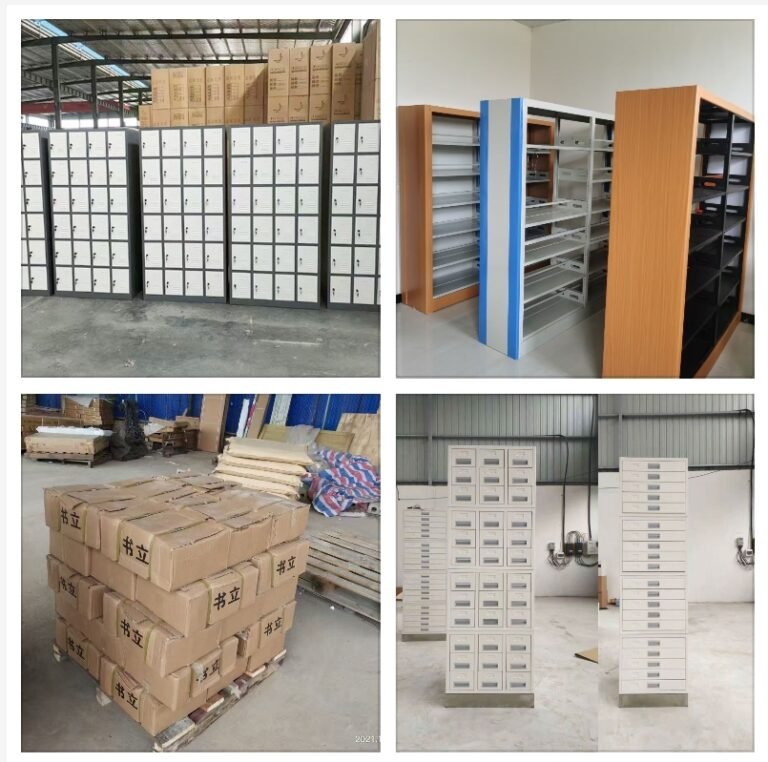
A clinic’s day runs on finding things in seconds. The patient chart from three visits ago. The consent form sitting in the waiting pile. The otoscope tips, the gauze packs, the procedure supplies stored away from dust and splashes. Patient records have to be tidy because a mixed-up chart is not just messy — it is a clinical error waiting to happen. And every storage surface in a clinic has to survive the cleaning round: wipes, disinfectant, water on a schedule. We build steel filing cabinets and medical instrument cabinets, and this is how we would plan file management for clinics, from intake to archive.
How records and supplies actually move through a clinic
A clinic is a flow, not a storage room. Incoming charts land in the waiting area pile. Each visit pulls a chart, adds notes, and pushes it back. At day’s end, closed-visit records go down to the archive. Instruments and consumables live near the procedure rooms, sorted by what the nurse reaches first.
When storage is wrong, every step slows down. Charts stacked on a counter behind the reception desk get mixed with invoices. Instruments sitting in open trolleys collect dust. Archived records on open shelves collect the same air and moisture the clinic is actively trying to control. The right cabinet at each point of the flow is what keeps the clinic moving instead of searching.
Glass-door cabinets for the charts staff reach every day
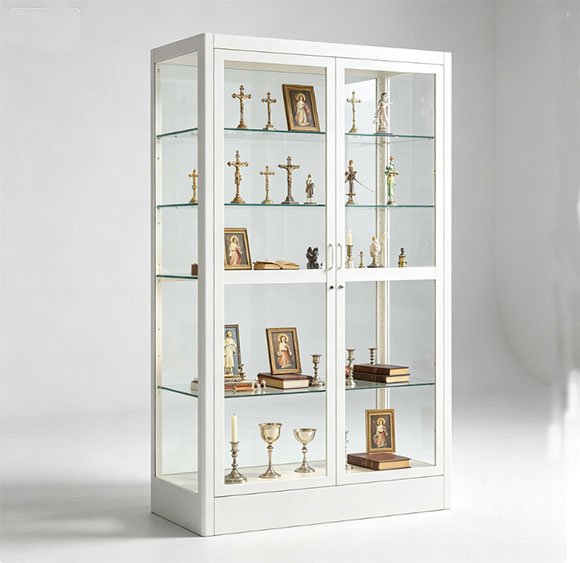
The charts handled all day — active patients, waiting-room records, consent forms — should be visible at a glance, not buried behind closed doors. Our glass-door cabinet (model 002, 44 kg, H1850 × W900 × D400) uses fully tempered glass double doors in a narrow steel frame.
The nurse sees the binder spines, grabs the right chart in seconds, and the doors close again. Closed means dust out, curious fingers out, and the reception area looking like a clinic instead of a records warehouse. The steel frame takes a wipe-down after every cleaning round, and tempered glass is the safe choice for furniture in rooms the public walks through. For daily use, this is the filing cabinet with lock glass door clinic buyers ask about: see what you need, keep it enclosed when you do not.
Instrument cabinets for clinical supplies
Beyond paper, a clinic stores instruments and consumables that need their own logic. Two cabinet lines in our range fit this directly.
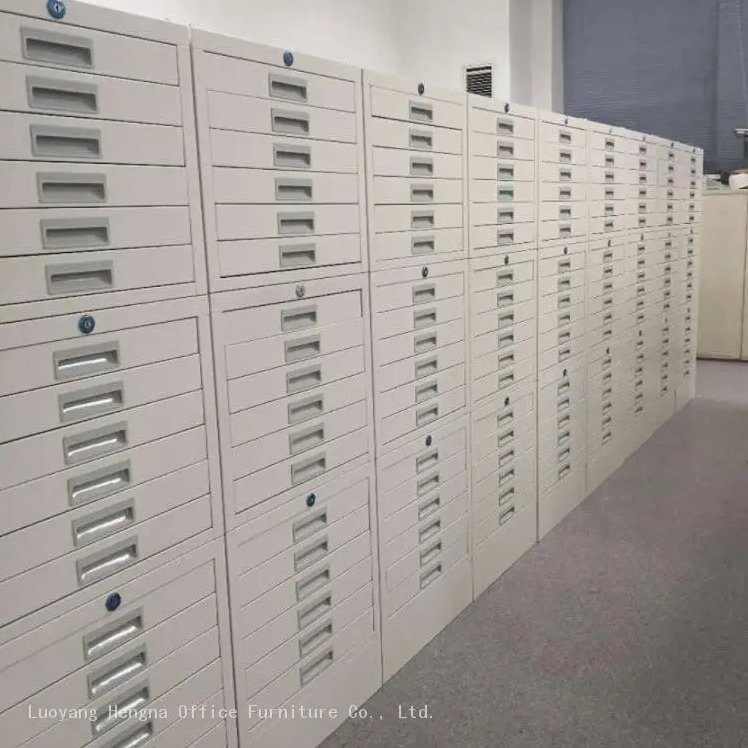
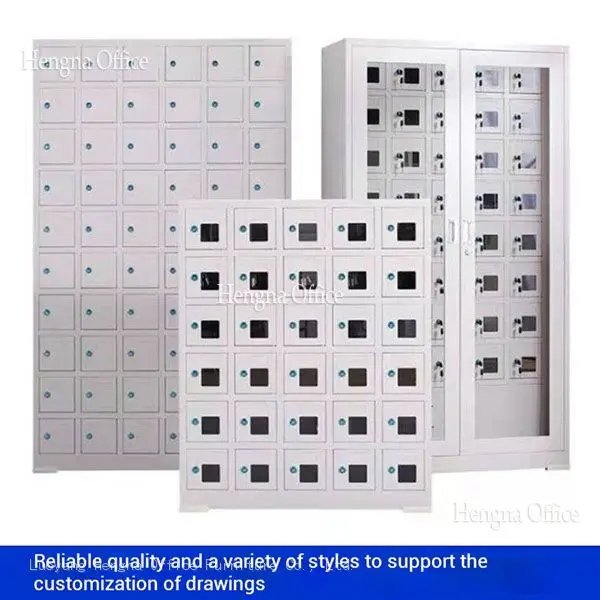
The large instrument cabinet (model 003, 43 kg) is built for bulk instrument and supply storage — procedure kits, dressing packs, larger equipment kept between uses. The equal-grid instrument cabinet (model 004, 40 kg) divides the interior into organised compartments, so each procedure type has its own place and nothing slides behind a stack of supplies.
Both are cold-rolled steel with an electrostatic powder coat: a smooth, continuous surface that wipes down after each cleaning round, with no seams that trap dust or moisture. In a clinic, the storage surface has to survive disinfection daily — and powder-coated steel does exactly that, instead of absorbing moisture the way wood or veneer slowly does.
Closed cabinets for archived patient records
Records that close — finished treatment courses, transferred-out patients, old test results — leave the waiting area but never leave the clinic’s responsibility. These go into the double-door file cabinet (model 001, 39 kg, H1850 × W900 × D400), with adjustable shelves inside for box files and archival binders, behind a closed, lockable door.
The records stay confidential, out of daily circulation, but still on site for referral, follow-up, or audit. Adjustable shelves mean you reshape the interior as box sizes change — no wasted space, no overstuffed rows.
Why steel storage earns its place in a clinic
Clinics clean surfaces on a schedule, and furniture is part of that schedule. Powder-coated cold-rolled steel is a smooth, non-absorbent surface: disinfectant wipes pass over it, water does not soak in, and there is no wood grain or veneer seam to trap dust and moisture. Steel does not warp, swell, or grow the conditions that hide grime — which is exactly what a hygiene-conscious environment wants from its storage.
Combine that with the flat-pack structure: each tall cabinet ships as 0.14 m³ (1880 × 930 × 80 mm), so a clinic outfitting three rooms or a healthcare group equipping several locations fits the whole order into far less freight than assembled furniture. Everything comes in three colour systems — WDH grey-white, WDK curry-white, WDW pure white — matching the clean, bright look a clinic reception and procedure area wants.
The spec sheet
| Item | Value |
|---|---|
| Range | KD knock-down steel filing and instrument cabinets, 19 standard types |
| Tall cabinet size | H1850 × W900 × D400 mm |
| Double-door file cabinet | Model 001, 39 kg, double door + adjustable shelves |
| Glass-door cabinet | Model 002, 44 kg, fully tempered glass double doors |
| Large instrument cabinet | Model 003, 43 kg |
| Equal-grid instrument cabinet | Model 004, 40 kg, divided interior |
| Material | Cold-rolled steel, electrostatic powder coat |
| Colours | WDH grey-white / WDK curry-white / WDW pure white |
| Packing | KD flat pack; tall cabinet 0.14 m³, packed 1880 × 930 × 80 mm |
| Certification | CE |
| Warranty | One year |
| MOQ and lead time | Confirm in the quotation |
FAQ
Can clinic cabinets be wiped down with disinfectant? Yes. The powder-coated cold-rolled steel surface is smooth and non-absorbent, built for the clinic cleaning round.
What cabinet holds active charts in the waiting area? The glass-door model (002): tempered glass doors so staff see chart spines at a glance, with steel frames that close and lock.
Where do instruments and consumables go? The large instrument cabinet (003) for bulk supplies, and the equal-grid instrument cabinet (004) for compartment-organised procedure kits.
Where do archived patient records live? Behind closed doors in the double-door file cabinet (001) with adjustable shelves — confidential, enclosed, still on site.
How does freight work for a multi-room clinic order? Every cabinet ships as a flat pack — 0.14 m³ per tall cabinet — so one 40 ft container holds far more KD cabinets than assembled ones.
What is the warranty, and how fast do we quote? One-year warranty. Enquiries are quoted within 24 hours.
A final buying note
In a clinic, storage is part of clinical flow: charts visible but enclosed, instruments compartment-organised, archived records confidential behind closed doors, every surface wipe-clean after the daily disinfection round. Powder-coated cold-rolled steel, flat packs of 0.14 m³ that freight efficiently, CE certified and warranted for a year. That is file management for clinics built around the way care actually moves — find it fast, keep it clean, keep it confidential.
Cindy Steel Furniture — factory-direct steel filing cabinets, built for clinics and patient records organization.