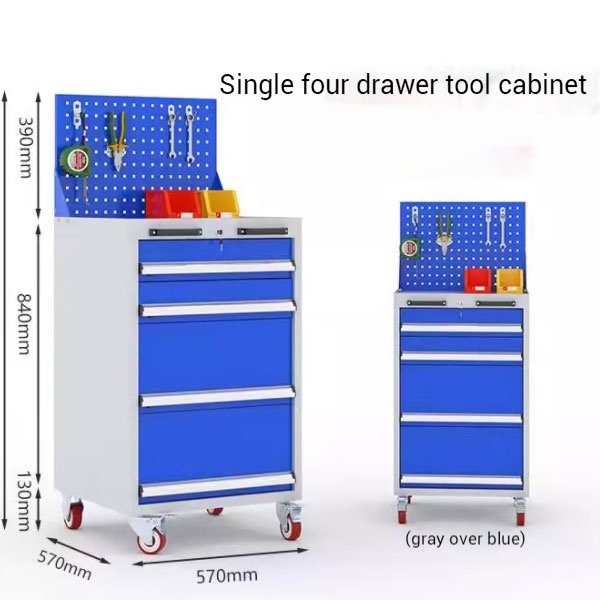
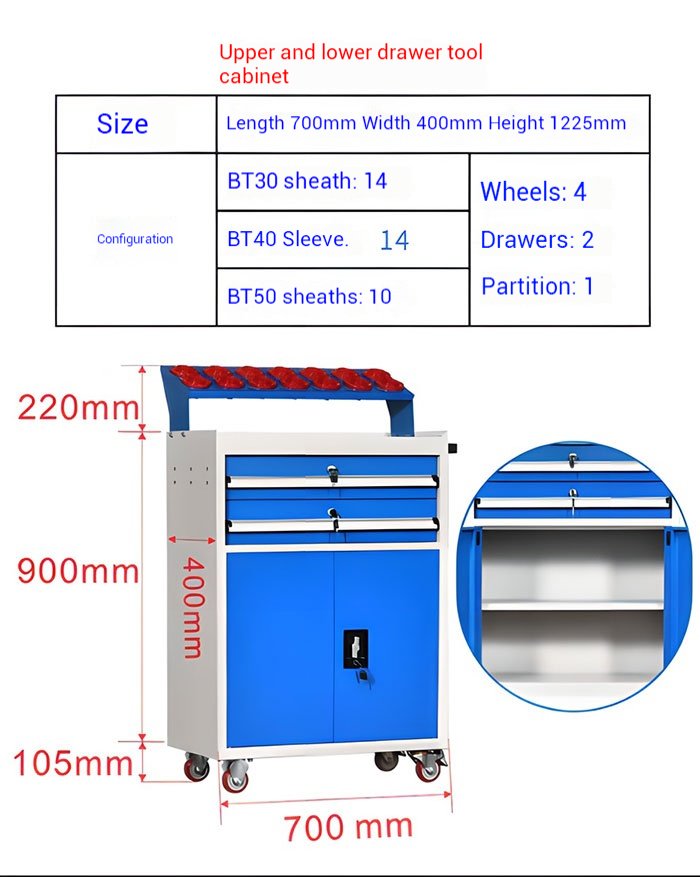
Salt air eats steel for breakfast. In a shipyard workshop within 5 kilometers of the coast, a standard powder-coated tool cabinet starts showing rust spots in 6 months. By year two, the drawer slides seize up, the doors sag, and your expensive tools sit in a cabinet that looks like it survived a shipwreck. If you’re buying tool storage for a shipyard, corrosion resistance isn’t optional — it’s the first spec to check.
This guide covers what actually works in shipyard workshops: the materials, coatings, and design features that keep a rolling tool cabinet functional when salt spray, welding sparks, and constant humidity are part of daily life.

Why Shipyards Are the Hardest Environment for Tool Storage
Shipyard workshops combine three corrosion accelerators that most industrial environments don’t have simultaneously:
- Salt spray: Coastal air carries sodium chloride particles that settle on every surface. These particles absorb moisture and create a continuous electrolyte film that accelerates rust formation. Even indoor workshops within 2km of the coast get significant salt deposition.
- Welding and cutting sparks: Hot metal spatter lands on cabinet surfaces and burns through powder coat. Each spark landing creates a bare steel spot where rust starts immediately.
- High humidity: Coastal humidity rarely drops below 60%. Combined with temperature swings (warm days, cool nights), condensation forms on metal surfaces every morning.
- Chemical exposure: Degreasing solvents, rust removers, and marine paint thinners splash onto tool storage during maintenance work.
A tool cabinet that works fine in an inland factory fails fast in a shipyard. You need to spec for the environment, not just the application.
Corrosion Protection: What Actually Works
Not all corrosion protection is equal. Here’s a comparison of common options:
| Protection Method | Salt Spray Resistance | Cost vs Standard | Best For |
|---|---|---|---|
| Standard powder coat (40-60μm) | 200-400 hours | Baseline | Inland workshops, dry climates |
| Heavy powder coat (80-100μm) | 500-800 hours | +15-20% | Coastal areas, moderate salt exposure |
| Galvanized + powder coat | 1000+ hours | +30-40% | Shipyard workshops, direct salt spray |
| 304 stainless steel | 2000+ hours | +80-120% | Marine-grade, offshore platforms |
| 316L stainless steel | 5000+ hours | +150-200% | Offshore, chemical exposure |
For most shipyard workshops, galvanized steel with a powder-coat top layer is the sweet spot. The zinc layer sacrificially protects the base steel — even if the powder coat gets scratched or burned by sparks, the zinc corrodes first and keeps the steel underneath intact.
Rolling vs Stationary: When Mobility Matters in Shipyard Workshops
Shipyard maintenance work happens at the vessel, not at a fixed workbench. Fitters, electricians, and welders need their tools at the job site — whether that’s inside a hull section, on a dry dock floor, or at a gangway access point.
A rolling tool cabinet lets workers bring organized tool storage directly to the work area. This matters because:
- Less walking: Average shipyard maintenance tech walks 8-12 km per shift retrieving tools from fixed storage. A rolling cabinet cuts this by 60-70%.
- Fewer lost tools: Tools stay in the cabinet, not scattered on the deck. When the job moves, the cabinet moves with it.
- Better organization: A dedicated rolling cabinet beats a random pile of toolboxes. Workers find what they need in seconds, not minutes.
- Safety: Tools left on deck create trip hazards. A cabinet with closed drawers keeps the work area clear.
The key is getting the right size. Too small and workers add loose toolboxes on top. Too large and it won’t fit through standard ship doorways (typically 600-700mm clear width). A cabinet width of 550-600mm with fold-down handles fits through most marine access points.
Caster Selection for Shipyard Floors
Shipyard floors are rough. Between weld spatter, metal shavings, concrete patches, and drainage channels, standard casters don’t last. Here’s what works:
| Caster Type | Load Rating | Floor Compatibility | Shipyard Suitability |
|---|---|---|---|
| Standard nylon | 50-75kg per wheel | Smooth concrete only | ❌ Fails on rough floors |
| Polyurethane | 100-150kg per wheel | Rough concrete, steel plate | ✅ Good for most shipyard floors |
| Cast iron with poly tread | 200-300kg per wheel | Extreme rough surfaces | ✅ Best for heavy loads on bad floors |
| Pneumatic | 80-120kg per wheel | Uneven surfaces, outdoor | ⚠️ Puncture risk from metal debris |
For shipyard workshops, polyurethane casters rated at 150kg per wheel handle most conditions. Add a total-lock brake on at least two wheels — the cabinet needs to stay put when a worker pulls a heavy drawer open on an uneven surface.
Caster size matters too. Wheels under 100mm diameter catch in floor cracks and spatter buildup. 125-150mm wheels roll over debris and small obstacles without stopping.
Drawer Slides: Handling the Load and the Environment
Shipyard tool kits are heavy. A fitter’s main drawer might carry 30-40kg of wrenches, sockets, and impact tools. Add corrosion from salt air and humidity, and standard slides fail in two ways:
- Corrosion seizure: Rust forms between the slide and the drawer member. The drawer sticks, then the user forces it, bending the slide.
- Roller failure: Standard steel rollers corrode and develop flat spots. The drawer wobbles and eventually falls off the track.
What to spec:
- Slide material: Zinc-plated or stainless steel slide members. Standard chrome-plated steel corrodes within 6-12 months in coastal environments.
- Load rating: 75kg per drawer minimum for general maintenance. 100kg+ for heavy equipment drawers carrying hydraulic tools or large wrenches.
- Full extension: Drawers should open 100% of their depth. Partial-extension slides (75% open) force workers to reach into dark corners and drop tools.
- Ball bearing vs roller: Ball bearing slides run smoother and handle side loads better. Worth the 20% premium for a cabinet that gets rolled across rough floors daily.
Pegboard Doors: Quick Access for Frequently Used Tools
In shipyard maintenance, certain tools get used every hour — pliers, wire strippers, multimeters, specific wrenches. Storing these in drawers wastes time. Pegboard doors let workers hang high-frequency tools at eye level, grab them instantly, and see at a glance if anything’s missing.
Pegboard options for shipyard use:
- Standard pegboard (6mm holes): Works for light tools under 2kg. Hooks pull out under heavy loads.
- Heavy-duty pegboard (10mm holes): Handles tools up to 5kg. Better for shipyard use where pliers and wrenches are heavier than light-duty versions.
- Magnetic strips: Mount on the inside of solid doors. Quick grab for steel tools. Not suitable for non-magnetic tools like aluminum housing instruments.
- Combination approach: Pegboard on one door, shelves on the other. Pegboard for hanging tools, shelves for boxed sets and instruments.
For shipyard workshops, we recommend heavy-duty pegboard with 10mm holes and reinforced hooks. Standard pegboard hooks bend when the cabinet rolls over rough floors and tools swing on their hooks.
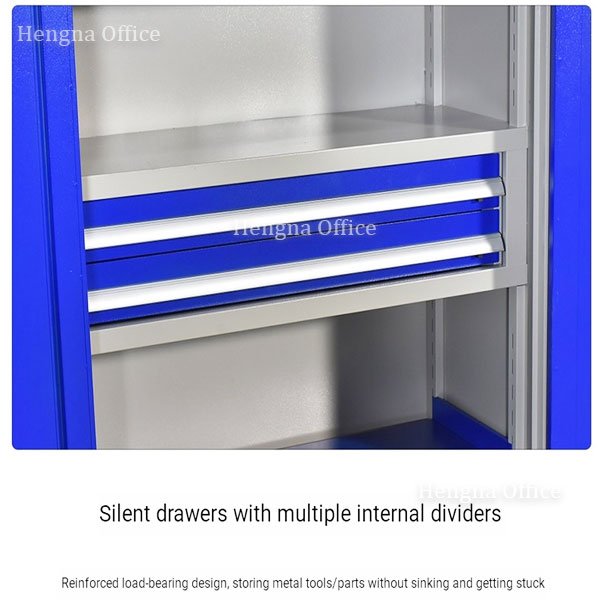
How We Build Corrosion-Resistant Cabinets
Our factory ships tool cabinets to shipyards in Southeast Asia, the Middle East, and West Africa. Here’s how we build for coastal environments:
- Base steel: Cold-rolled SPCC steel, 1.0-1.2mm. Every sheet tested for consistent thickness — variations over 0.1mm cause uneven coating and premature rust at thin spots.
- Pre-treatment: 7-stage phosphate conversion coating. This chemical bond between steel and powder coat is what prevents under-film corrosion. Skip this step and even 100-micron powder peels within 18 months.
- Zinc layer: Hot-dip galvanizing for coastal-environment models. Zinc thickness: 60-80 microns. Sacrificial protection means the steel stays rust-free even when the powder coat gets scratched.
- Powder coat: Polyester powder, 80 microns minimum. UV-stable formula resists chalking and fading from sunlight exposure in open-air shipyard workshops.
- Hardware: Zinc-plated or stainless steel fasteners, hinges, and drawer slides. Standard carbon steel hardware rusts first — then the rust stains spread to the surrounding panel.
- Assembly: Pre-installed slides, pre-drilled holes. Cabinet arrives 90% assembled. Field assembly takes 15-20 minutes with basic hand tools.
We test salt spray resistance per ASTM B117. Standard coastal models pass 800 hours. Marine-grade models with full galvanizing pass 1500+ hours. Test certificates available with every order.
Common Mistakes When Buying for Shipyard Use
After a decade of selling to marine and shipyard customers, these mistakes come up repeatedly:
- Using inland-spec cabinets: “It’s just a workshop” — until the first monsoon season hits and every cabinet has orange rust spots. Spec for the environment from day one.
- Ignoring caster brakes: A 100kg loaded cabinet rolling across a shipyard floor is a safety hazard. Always spec total-lock brakes on at least two casters.
- Wrong drawer depth: Shallow drawers (under 75mm) don’t fit shipyard tools. Impact wrenches, large pipe wrenches, and hydraulic fittings need 100mm+ depth.
- No spare keys: In a shipyard with 100+ workers across three shifts, keys get lost. Order 5-10 spare keys per cabinet. Keyed-alike systems save key management headaches.
- Forgetting about door clearance: Pegboard doors need 150-200mm clearance to open fully when tools are hanging. Measure your workshop aisle width before ordering.
Common Questions
Q: How close to the coast can I use a standard powder-coated cabinet?
A: Beyond 5km from the coast with no direct salt spray, a heavy powder coat (80+ microns) works. Within 5km or in direct salt spray zones, specify galvanized + powder coat. On vessels or offshore platforms, use stainless steel.
Q: Can I get rolling cabinets that fit through ship doors?
A: Yes. Our shipyard models are 550mm wide with fold-down side handles. They fit through standard 600mm marine doorways. Removable casters reduce height for tight vertical clearance.
Q: How do I prevent welding sparks from damaging the cabinet?
A: Position the cabinet 2-3 meters from welding stations when possible. For cabinets that must stay near welding, add a removable leather or fiberglass spark guard curtain on the side facing the weld area.
Q: What’s the lead time for galvanized models?
A: Galvanized + powder coat models ship in 20-25 days standard. Custom drawer configurations add 5-7 days. We consolidate orders with other shipyard equipment (workbenches, shelving) to optimize container loading.
Q: Do you offer stainless steel drawer slides?
A: Yes. 304 stainless slides are available as an upgrade. Recommended for cabinets within 1km of the coast or in areas with direct salt water exposure. Adds 25-30% to the base cabinet price.
Q: Can I get the cabinet color-matched to our shipyard safety scheme?
A: Yes. Standard colors are RAL 5012 (blue), RAL 2004 (orange), RAL 7035 (grey). Custom RAL colors available for orders over 50 units. Color matching adds 3-5 days to production.
The Short Version
A shipyard workshop destroys regular tool cabinets in 12-18 months. Salt air corrodes standard powder coat. Welding sparks burn through the surface. Humidity rusts drawer slides and hinges. The fix: galvanized steel base with heavy powder coat, zinc-plated or stainless hardware, polyurethane casters with brakes, and sealed drawer slides rated at 75kg+. Spending 30-40% more upfront on corrosion-resistant construction means your cabinet lasts 5+ years instead of needing replacement every year.
Ready to spec tool storage for your shipyard? Send us your workshop dimensions, tool list, and the distance from the coast. We’ll recommend the right corrosion protection level and give you a factory-direct quote with OEM branding options.