If you handle original art for a living — prints, etchings, photographs, oversized drawings — you already know the enemy. Paper curls. Dust settles into every crease. And the one damp week of the year can warp a sheet you will never be able to replace. A flat file cabinet is the standard answer in serious print studios and galleries, and this guide is written from the factory floor where we build steel A0 flat files. You get the specs that actually matter, not the brochure talk.
Why original art needs flat storage
Rolled prints develop a curl that never fully relaxes. Fold a sheet once and the crease is permanent — collectors will spot it from across the room. Stack work upright in a rack and the bottom sheets carry the weight of everything above them. Light does the rest, slowly draining colour from anything left exposed.
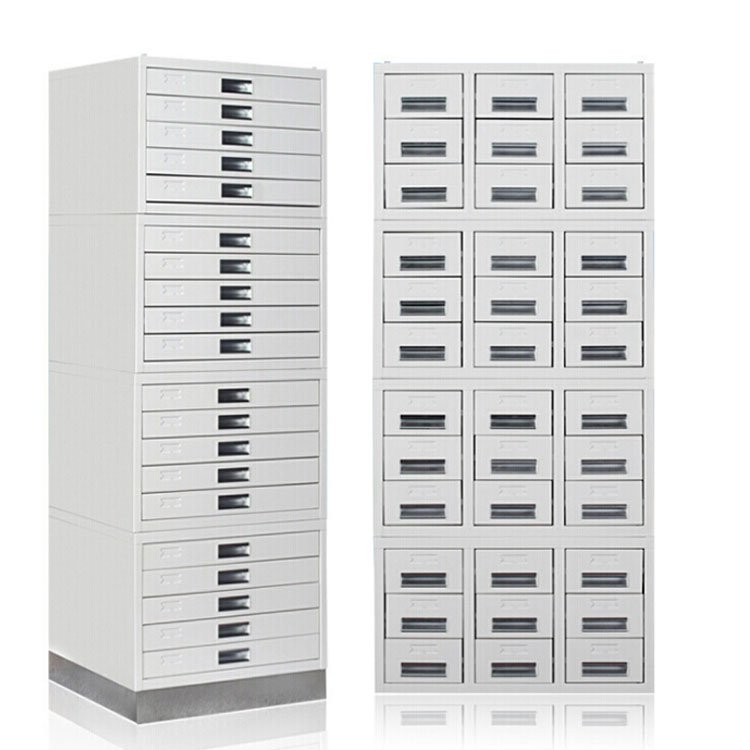
Flat storage solves this in one move: a shallow drawer that slides out horizontally, so every sheet lies flat, covered, and carries no weight from the stack above. That is why “flat file for art prints” is the storage term working artists actually search for. It is not a filing cabinet for office paper — the drawer depth and width are built around A0 and other large-format sheets, not A4.
In a gallery or a printmaking studio, a flat file does three jobs at once: it stores the work, it protects the work, and it keeps the work findable. Do it right and you stop thinking about storage completely, which is the real goal.
Metal flat file vs wooden — the storage problem nobody mentions
Most advice on flat files starts with wood. A wooden plan chest looks lovely in a studio photo, and it can hold prints fine for a while. The problem is what happens in months, not days.
Wood absorbs moisture. In a basement studio or anywhere with humidity swings, a wooden drawer swells, the panels move, and the paper sitting inside takes on that same damp. Then comes the part nobody photographs: mould and insects. Once mould touches an original print, that sheet is finished — no conservator will tell you otherwise.
Steel does none of this. Our cabinets are built from SPCC cold-rolled steel with an electrostatic powder-coat finish. Powder coat is baked on, so it does not peel or flake the way paint can. It keeps moisture out, it does not harbour insects, and it does not warp. For original art — where one sheet can be worth more than the whole cabinet — choosing a material that will not quietly damage the contents is the point of the purchase. Wood is a style choice. Steel is a storage decision.
What to look for in an art flat file cabinet
Not every flat file is worth your money, and the specs that separate a good one from a cheap one are easy to check if you know where to look.
Drawer load. This is the number most buyers skip, and it is the one that matters. Ours is rated at 150 kg per drawer, fully extended. Typical imports sit at 60–100 kg. Why does it matter for art? Because a drawer of heavy stock — thick paper, mounted boards, framed pieces laid flat — easily passes 60 kg. A weak slide will sag, bind, and eventually fail under that load. A 150 kg rating means the drawer keeps sliding smoothly even when it is packed with the heaviest prints you own.
Anti-tip, full-extension slides. A full drawer of prints is heavy at the front when you pull it out. Without an anti-tip mechanism, the whole cabinet can tilt forward and land on you. We fit heavy-duty anti-tip slides that let the drawer pull all the way out without the unit tipping. This is not a luxury; it is how you avoid the worst accident a studio can have.
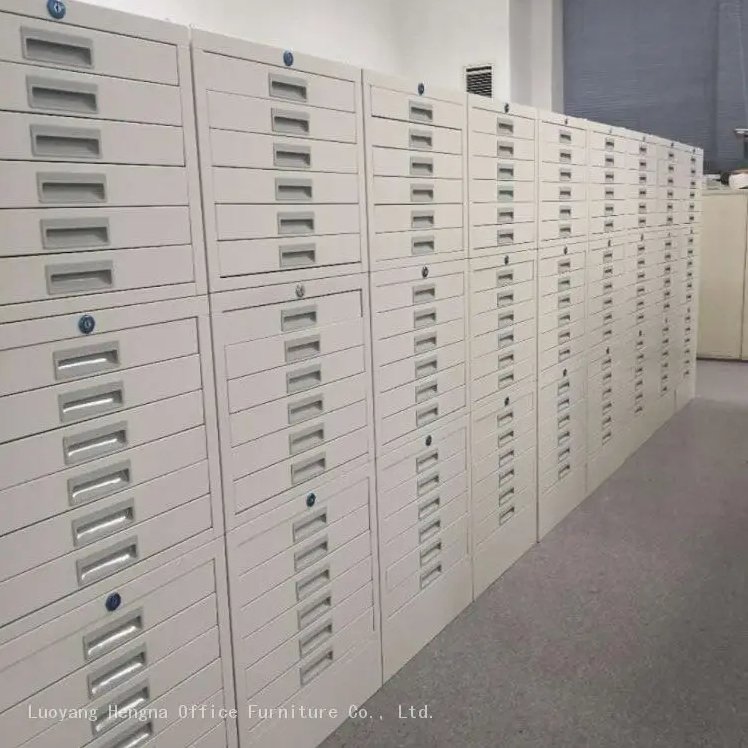
Label holders on the drawer face. In a 5-drawer cabinet holding hundreds of prints, you will not remember which drawer holds which series. An integrated label holder on the drawer front lets you tag each one. Ten seconds of labelling saves you ten minutes of hunting, every single time.
A way to move it, and a reason for the legs. Look for side handles — a 1300 mm-wide loaded cabinet is not pleasant to grab by the edges. And the cabinet should sit on legs, clear of the floor. That gap is what keeps a spill or a damp floor from reaching your prints through the base.
Units that stack. Buy one cabinet now, and add a second on top later as the collection grows. A single section that is independent and stackable means your storage can expand without replacing what you already own.
Arrives assembled. You want a cabinet that lands ready to use, not a box of parts and a weekend of instructions. Ours ships fully assembled — it is delivered and used, not built.
The real specs behind “holds A0 flat”
Here is the cabinet we build, in plain numbers, so you can compare it against what you are being quoted:
| Specification | Value |
|---|---|
| Drawers | 5, full-extension, anti-tip slides |
| Load per drawer | 150 kg when fully extended |
| Size (single section) | 1300 × 930 × 650 mm |
| Material | SPCC cold-rolled steel, electrostatic powder coat |
| Finish | White powder coat |
| Base | Legs clear of floor, anti-moisture |
| Extras | Side handles, integrated label holders on each drawer |
| Delivery | Fully assembled, moisture film + corner protection |
| Certification | CE |
A 1300 × 930 mm drawer takes an A0 sheet laid flat with room to spare, and the 5-drawer layout gives you a real archive rather than a single-sheet drawer. If you are choosing between a flat file and a cheap option, run these numbers against the 60–100 kg rating you will usually be offered.
How to organize prints in a flat file
Flat storage only helps if the cabinet is actually used. A simple system keeps it working:
- Put each print in a sleeve or between boards if it is not framed. Framed pieces can sit flat directly, but keep a board between them.
- Label every drawer as soon as you fill it — date, series, or client name. The label holder is there for exactly this.
- Store the heaviest pieces in the lowest drawers. You will pull them less often, and it keeps the cabinet’s centre of gravity low.
- Rotate stock you sell or exhibit, so the most active drawers stay at a comfortable height.
- Leave a little room in each drawer. Packed-to-the-top drawers are the ones that cause edge wear when you slide them.
This takes about twenty minutes to set up once, and it is what separates a real archive from a pile of paper inside a fancy box.
FAQ
What is the minimum order? One section. We do not force you to buy a stack to get a single cabinet.
How long does delivery take? Standard orders ship in 7–15 days. Custom work — your logo, a specific colour, custom packaging — runs 20–30 days.
Can it be branded? Yes. We support OEM and ODM, including silk-screened logos, custom colours, and custom packaging.
Is it CE certified? Yes.
How is it packed? Fully assembled, wrapped in moisture-protective film with corner protection, so it arrives intact.
Where can I get a price? Send us the quantity and delivery port — quotes go out within 24 hours.
A final buying note
If you store original art, buy the material and the slides that will not quietly ruin it. A steel flat file with 150 kg anti-tip drawers, powder-coated against moisture, and shipped assembled, is the version you set up once and stop thinking about. That is the whole job of storage: you should never have to worry about it again.
Cindy Steel Furniture — factory-direct steel flat files, built for studios and galleries that keep originals.