A food testing lab has one right answer for its worktop: solid phenolic resin. Laminate won’t survive the daily disinfectant cycle. Stainless steel pits from chlorine. If you get this wrong, the bench fails within months — and then you’re explaining to the audit team why the lab furniture is falling apart.
Walk into a food QA lab at any decent-sized plant. The QC bench is getting acid and solvent splashes all day — sulfuric for protein testing, petroleum ether for fat extraction, peracetic acid for peroxide values. The microbiology bench gets hit even harder: sodium hypochlorite wiped across it six times a shift, UV light beaming down, petri dishes stacked end to end.
A worktop that can’t handle all this doesn’t just look bad. It warps under your analytical balance and your readings drift. It absorbs liquid and cross-contaminates samples. It delaminates at the edges and the auditor flags it. Replacing the bench is cheap compared to re-running a batch of destroyed samples.
Three Things a Food Lab Worktop Has to Handle — Miss One and It’s a Problem
It has to take disinfectants. Sodium hypochlorite (bleach), peracetic acid, 70% ethanol — these hit the bench dozens of times a day. A laminate-faced top soaks bleach through the edge seal within weeks. The glue under the surface breaks down, the laminate bubbles, and you can press the edge with your finger and feel it give way. That top is rotting from the inside.
It has to take acids and solvents without absorbing them. QA labs use hydrochloric acid, sulfuric acid, nitric acid, acetic acid, sodium hydroxide, petroleum ether, diethyl ether. Not a drop here and there — full beakers, sometimes spilled. A laminate top lets acid migrate into the core. The particleboard swells, the top warps, and the whole thing is scrap.
It has to clean down to zero. A microbiology lab work surface has hygiene requirements close to an operating room. No seams, no pores, no scratch grooves — those are hiding spots for bacteria that a disinfectant wipe can never reach. Seamless, non-porous, scratch-resistant. That’s the floor.
Miss any one of these three and the bench is a liability. Miss two and you’re replacing it inside a year.
Why Solid Phenolic Resin Is the Standard for Food Labs
Three common lab worktop materials in food testing — and two of them have a catch.
Laminate-faced tops look the part out of the box, but the structure is a thin decorative layer glued onto MDF or particleboard. In a food lab environment, the disinfectant cycle breaks the adhesive bond at the seams. The surface blisters up in three months, the edges crumble in six. Laminate tops fail in food labs not because the laminate is bad — because the core underneath can’t handle moisture and chemicals.
Stainless steel tops look clean, and for a pure cutting-room or meat-processing environment they make sense. But in a QA or microbiology lab, stainless has a specific enemy: chlorine-based disinfectants. Sodium hypochlorite contains chloride ions, and over repeated daily exposure those ions cause pitting — tiny pin-hole corrosion marks across the surface. Stainless is tough against impact, not immune to chemistry. In a food lab running bleach-based cleaning protocols, stainless is the wrong pick.
Solid phenolic resin is different. Multiple layers of kraft paper are saturated with phenolic resin, then pressed under heat and pressure into one homogeneous slab. There is no separate surface layer to delaminate, no particleboard core to swell. Bleach wipes leave no mark. Dilute acids and solvents don’t penetrate even if left overnight. The surface is dense and non-porous — swab it with alcohol and the swab comes away clean. This is what a food lab actually needs.
19mm is the thickness you want. You’ll find 12mm and 16mm phenolic tops at lower prices, but a QA bench carries a Kjeldahl nitrogen analyzer, a Soxhlet extractor, an analytical balance — all expensive equipment. A thinner top flexes under load, and that vibration passes straight through to your instruments. Saving a few millimeters on thickness isn’t worth the drift in your readings.
QA Lab vs Microbiology Lab — Same Top, Different Priorities
QA wet-chemistry bench: Chemical resistance is number one. Your worktop will see hydrochloric acid, sulfuric acid, petroleum ether, diethyl ether — the full range of food chemistry solvents. Solid phenolic handles all of them at routine concentrations. One exception to be honest about: concentrated nitric acid will attack phenolic resin. If you spill a large amount, wipe it quickly — don’t let it sit overnight. Not a secret, just the physical chemistry of the material.
Microbiology bench: Hygiene is number one. You’re wiping with sodium hypochlorite multiple times per shift, the UV lamp runs between sessions, and aseptic technique demands a surface with zero hiding spots. Phenolic resin is non-porous and seamless — proper installation with sealed joints leaves no cracks for microbes. Stainless steel, counter-intuitively, is worse here — not because it’s dirty, but because chlorine-based disinfectants pit the surface over time, and those pits become micro-crevices where bacteria survive.
Food Testing Lab Bench — 19mm Phenolic Resin Worktop for QA |The Structure Matters Too
A great worktop on a frame that rusts is still a problem. Food labs are humid environments — frequent cleaning, wet floors, damp air.
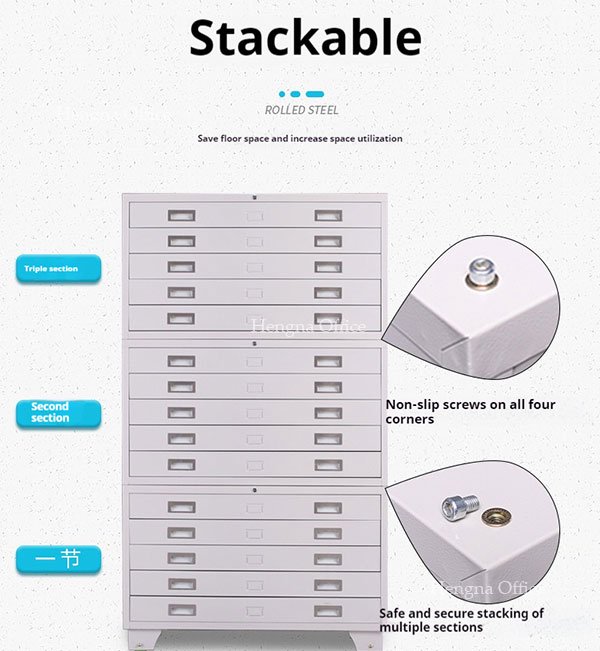
The frame on this bench is 1.2mm cold-rolled steel, welded, phosphate pre-treated, then electrostatic powder coated. Not wet paint — wet paint flakes off at the cabinet corners after two years of daily disinfectant wipes. Powder coating bonds to the steel at a molecular level. Normal scrubbing won’t remove it.
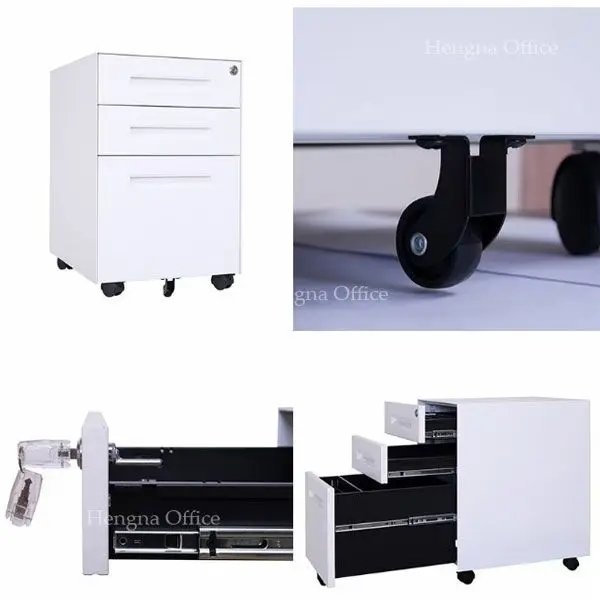
Cabinet interiors have capped screw holes — exposed adjustment holes in a humid lab collect moisture and rust. Drawers on three-section ball-bearing slides pull out fully and can be removed for cleaning. In a QA lab, reagents crystallize when spilled. Drawer tracks that can’t be cleaned eventually jam.
Sizing and Options
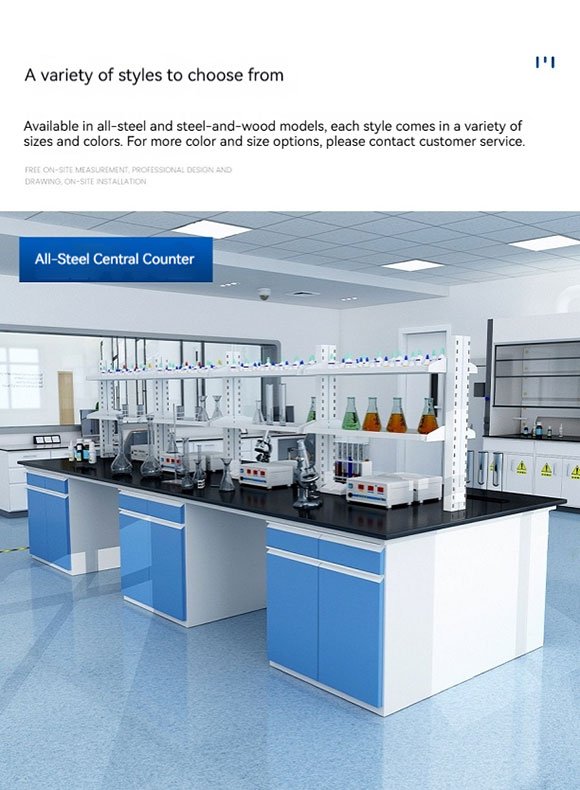
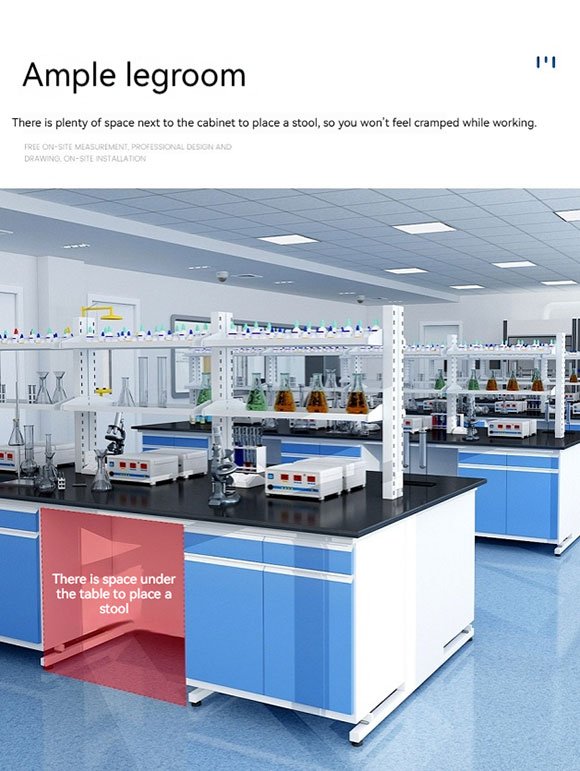
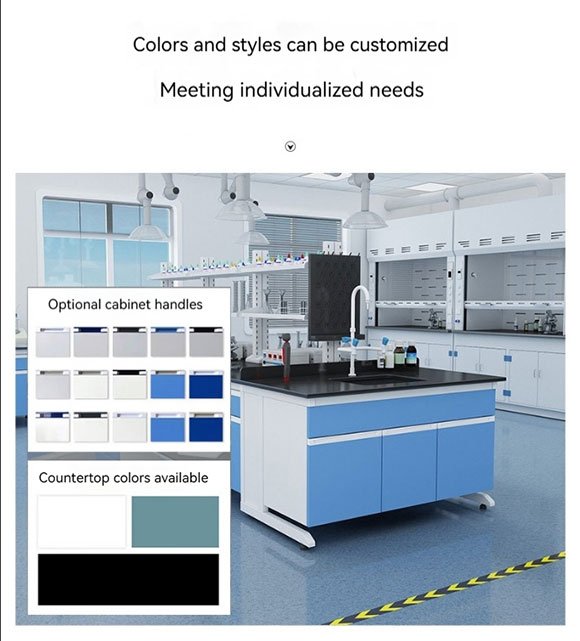
Standard widths range from 1000mm to 4500mm, 750mm deep, 800mm high. Typical food lab layouts use wall benches at the perimeter and island benches in the center, with reagent racks overhead.
Options worth considering:
- PP sink with gooseneck faucet — PP handles acids better than stainless
- Built-in power modules — keeps instrument cables off the work surface
- Lockable drawers and doors — QA reference standards and microbiology media need restricted access
Not every lab needs everything. Configure to your floor plan.
Straight Talk
Luoyang Hengna Office Furniture Co., Ltd. — own brand, directly partnered with production facilities. We’ve been building steel-wood lab benches for nine years, and food testing labs are a regular part of our project pipeline — everything from provincial inspection agencies to in-house QC labs at food plants. If you’re setting up a food testing lab or refreshing your existing benches, send a floor plan. You’ll get a proposal and pricing within 24 hours.
But the point of this article isn’t to sell you a bench. It’s to help you not buy the wrong one. Get the worktop right first — the rest follows.
FAQ
Solid phenolic resin or stainless steel for food labs? Phenolic. Stainless pits from chlorine-based disinfectants used daily in food labs. Phenolic doesn’t. The only exception is a dry lab with zero bleach protocol.
Is 12mm phenolic thick enough? Not for a working QA bench. Instruments like Kjeldahl analyzers and analytical balances need a stable surface. 19mm is the standard — don’t cut corners on thickness.
Standards compliance? The phenolic worktop meets the cleaning and non-porous surface requirements of GB 14881 (General Hygiene Standard for Food Production). Documentation available for your audit file.
How long does the worktop last? With normal use and basic maintenance — ten years plus. Extreme chemical spills left to sit, or hot glassware placed directly on the surface, shortens life. Common sense applies.
Custom sizes? Yes. Standard and non-standard dimensions. Send your floor plan.
Are you a trading company? No. Luoyang Hengna Office Furniture Co., Ltd. — own brand, manufacturer-direct. No middleman in the chain.